
A PHOTOGRAPHER FOCUSES ON Norway
SVETLANA LEAHY CHRONICLES HER FAMILY’S RECENT VACATION TO THE PICTURESQUE SCANDINAVIAN COUNTRY
I've planned plenty of vacations, so naturally I thought organizing ten days in Norway would be easy. The ten days did not include five additional days allocated for travel time.
"I've changed our itinerary—again," I announced to my family after approximately 35 evenings of spinning maps, calculating distances, checking flights, planning hikes, finding parking and grocery stores and rearranging our route for what felt like the hundredth time.
Meanwhile, we were leaving in two weeks! We had plane tickets to Norway, but no rental cars, no accommodations, and still no final itinerary.
At least we'd agreed on which country we were visiting.
I was too excited; I wanted to see everything Norway has to offer.
Eventually, I admitted defeat. We could either have a relaxing vacation or drive around Norway for ten days. Not both.
We settled on two regions: the Lofoten Islands and Geiranger. Lofoten was absolutely non-negotiable.
I'd dreamed of visiting those islands since I learned about photography workshops featuring the spectacular northern lights, little red fishing cabins, and jagged mountains rising directly from the sea.
I wanted so badly to attend one of those workshops, but they cost more than $6,000 per person, just for instruction. For that money, I could bring my entire family to Norway! Besides, what exactly was I going to do with all those photographs afterward?
Fast-forward to 2025. Our teenage son started talking about how cool it would be to visit Norway. Excellent—Norway it would be.
First Impressions
We landed in Oslo, took a flight to Narvik, rented a car there, and drove for five hours through the Lofoten Islands. Driving is the easiest way to see the area, including scenery and how people live.
Our home base was Flakstadøya. From there, we took short drives to small fishing villages and hiking trails.
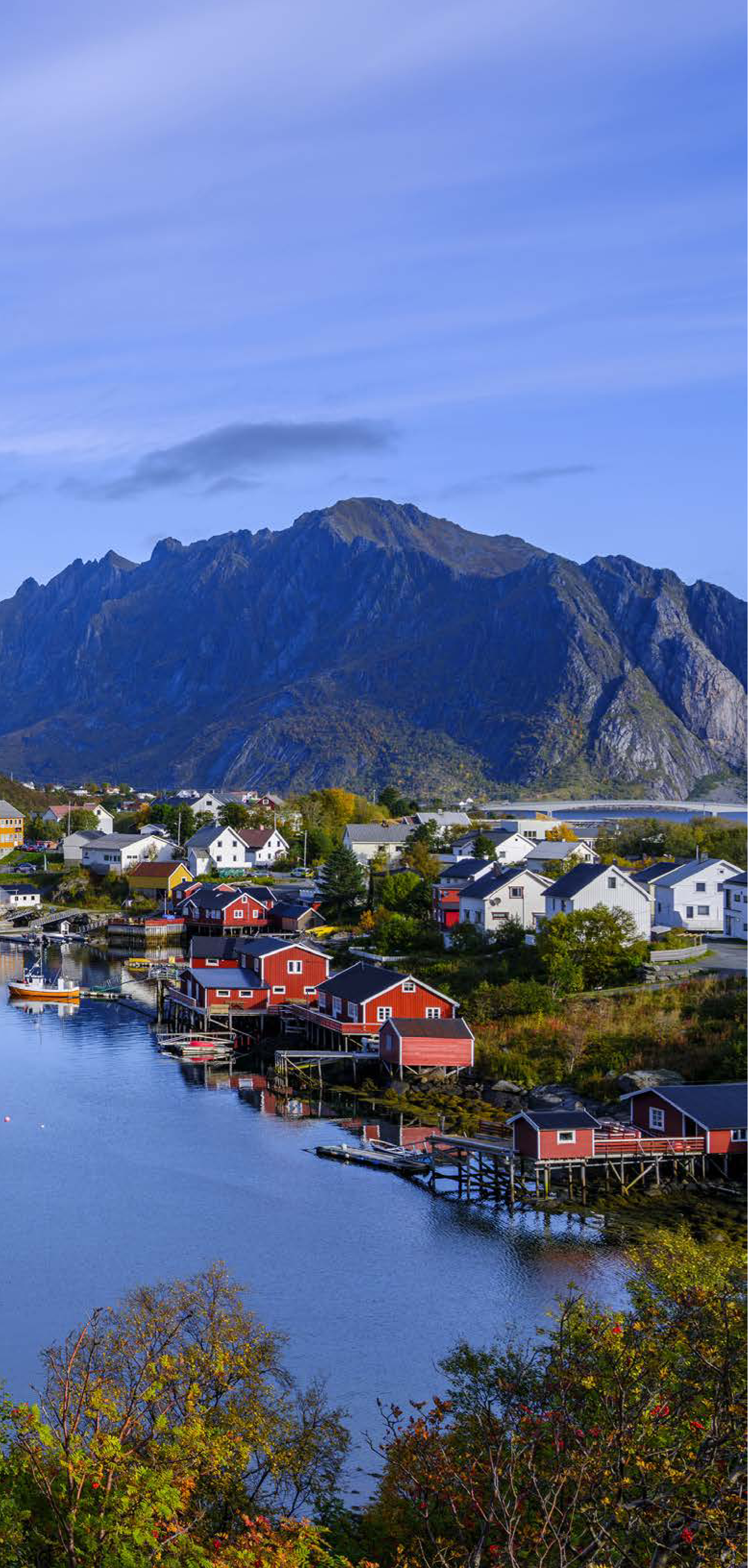
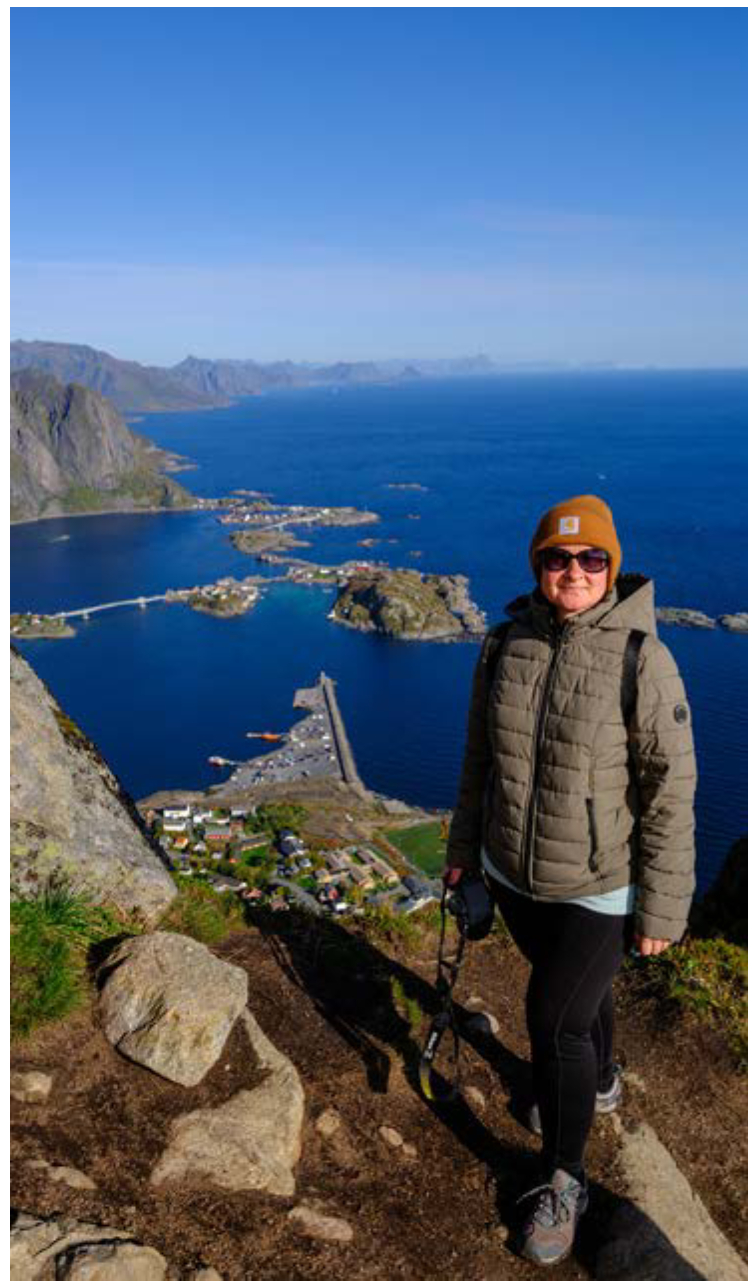
Many years after discovering Lofoten through photographs, I was finally standing on Hamnøy Bridge, photographing the red fishing village below.
I knew this scene almost by heart, having admired it so many times, but seeing it in person was an entirely different experience: the sound of the water, the wind, the colors of everything, from the water and mountains to the colorful homes and boats. So much color everywhere!
Nearby was Reine, which is widely considered Norway’s most beautiful village, famously earning that title from National Geographic.
Little red and yellow fishing cabins sit on stilts above the water, surrounded by enormous, jagged mountains that rise straight out of the sea. It's been a fishing community for centuries, with a trading history dating back to 1743. Fishing is still part of everyday life here, especially during cod season. You'll see enormous wooden racks used to dry cod in the open air, turning it into stockfish. It's a tradition going back to Viking times.
As I stood there with my camera, I kept thinking about how many years I'd wanted to visit this place. And now I was actually here, looking at the very scenery I'd once considered a distant dream.
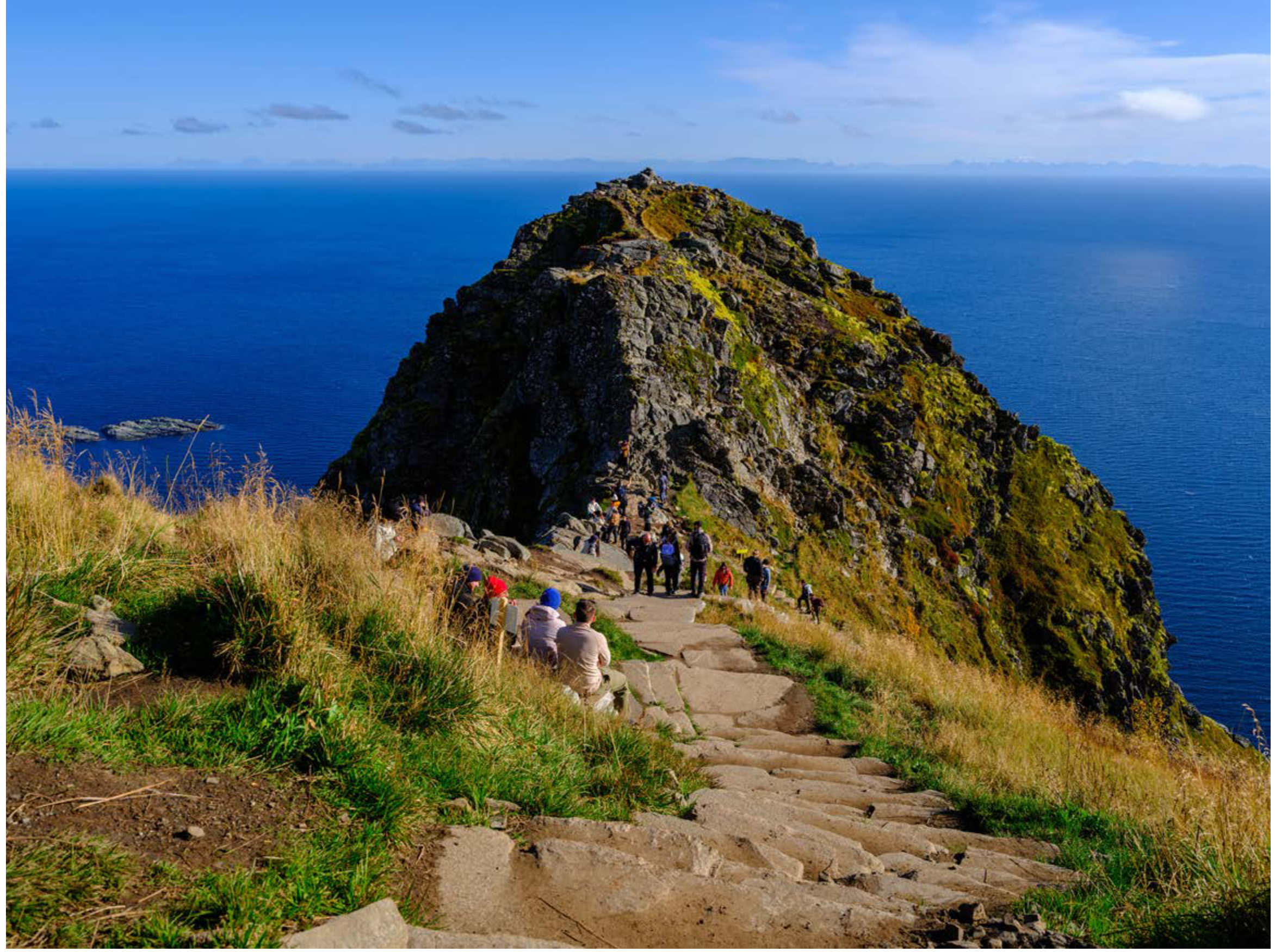
Our first ambitious hike was Reinebringen. It's a hike with 2,000 stone steps leading to the top. And, unfortunately, you have to hike the same 2,000 steps back down.
There are no convenient railings to cling to; it’s just you, the mountain, and your common sense. The views from the top were spectacular. The following morning, however, our legs regretted it.
Kvalvika Beach in Lofotodden National Park was next. Another beautiful trail, another excellent opportunity to finish off whatever leg muscles were still functioning.
Here's something important about Norwegian hiking trails: when a trail is marked “easy,” you should mentally upgrade it to “moderate.” And moderate? Prepare for an adventure.
Also, the advertised mileage sometimes means one-way and sometimes means round-trip.
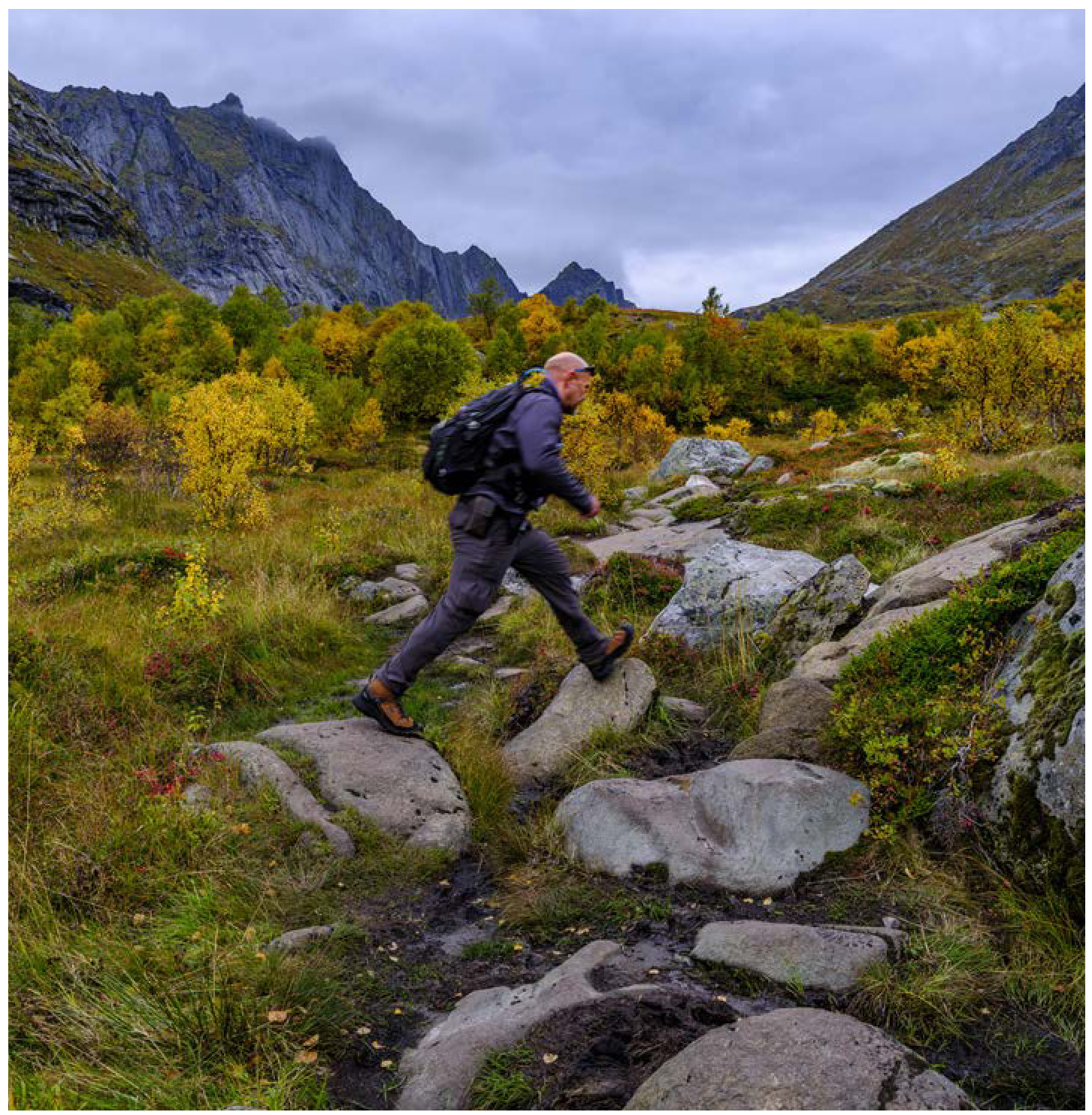
We discovered that our lovely three-mile hike was actually six miles round trip. Six miles of mud, rocks, boulders, and the occasional game of “choose your puddle wisely.” Waterproof shoes are a must. We were prepared, as I had read reviews on each trail prior to our trip.
We had a whale of a time crawling over boulders and through mud on our way to Kvalvika Beach, surrounded by gorgeous autumn colors, rowan trees covered in berries, and lush tundra. In five hours, we experienced sunshine, rain, fog, and a rainbow before finally reaching the beach with its beautiful turquoise water. Four seasons in one hike!
We laughed at how sore our legs were while admiring the incredible scenery.
Trails in Lofoten are safe in one respect: there are no large land predators to worry about. No bears, no mountain lions. For the very first time, I was in a vast mountainous landscape where I didn't have to worry about bears and cougars, as I would in some national parks in the United States.
For the next three days, my quads were so sore I had to walk downstairs backward. So much for our ambitious hiking itinerary.
We spent the rest of our time exploring pretty little fishing villages, which mostly consisted of me yelling, "Stop! Pull over!" every 15 minutes.
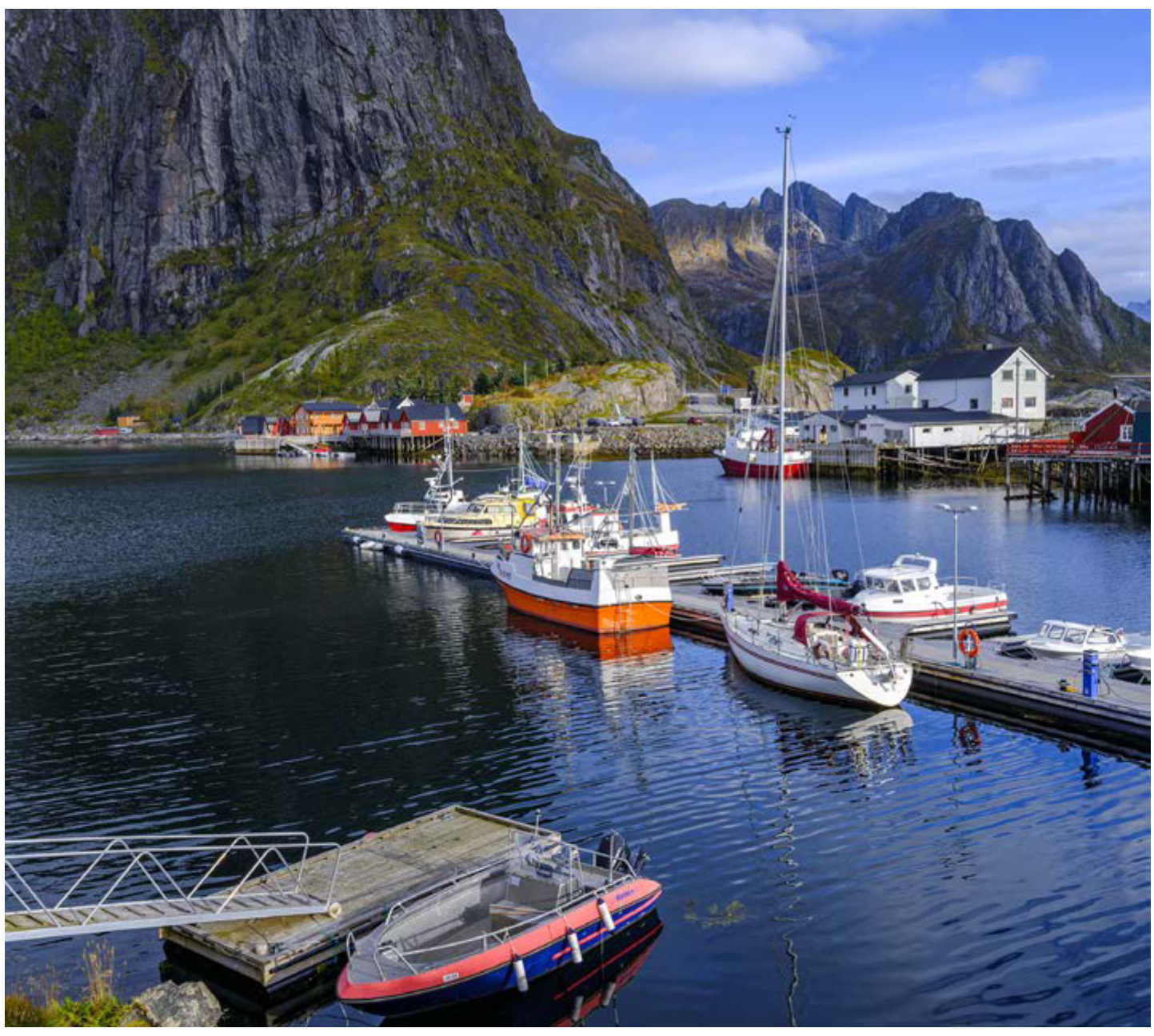
Sakrisøy is a small island town distinct for its bright yellow rorbuer cabins and local seafood spots.
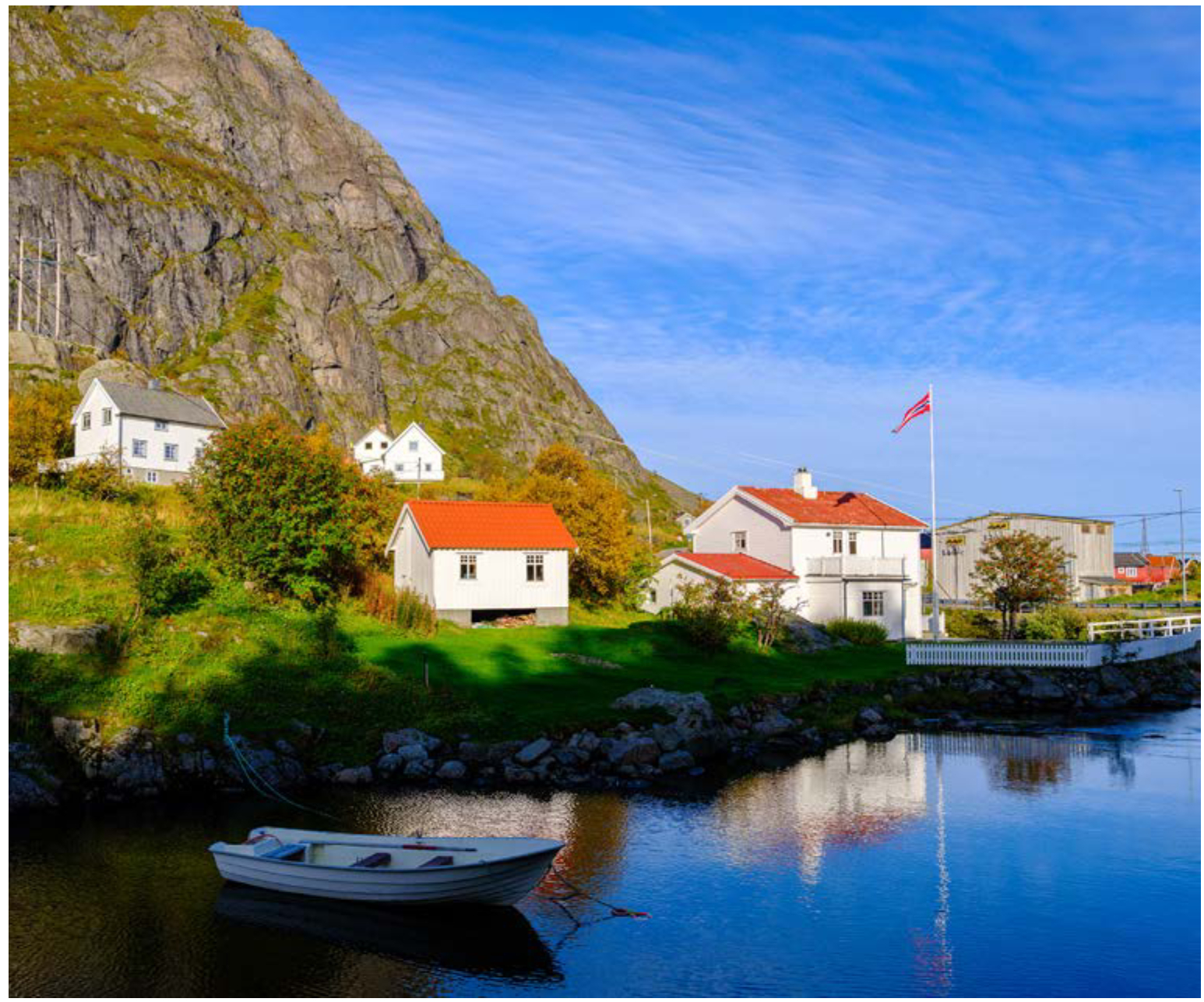
Å, a mid-16th-century village with well-preserved historic buildings, is located at the southern tip of the Lofoten road and is home to the Norwegian Fishing Village Museum (Norsk Fiskeværsmuseum) and the Lofoten Stockfish Museum.
Although Lofoten lies above the Arctic Circle, the September weather was surprisingly mild, mostly in the 50s. We had fog, clouds, rain, rainbows, and the most beautiful atmosphere.
For a photographer, it was paradise.
A Different View
Our second destination was the Geiranger region, where we rented a beautiful home on a
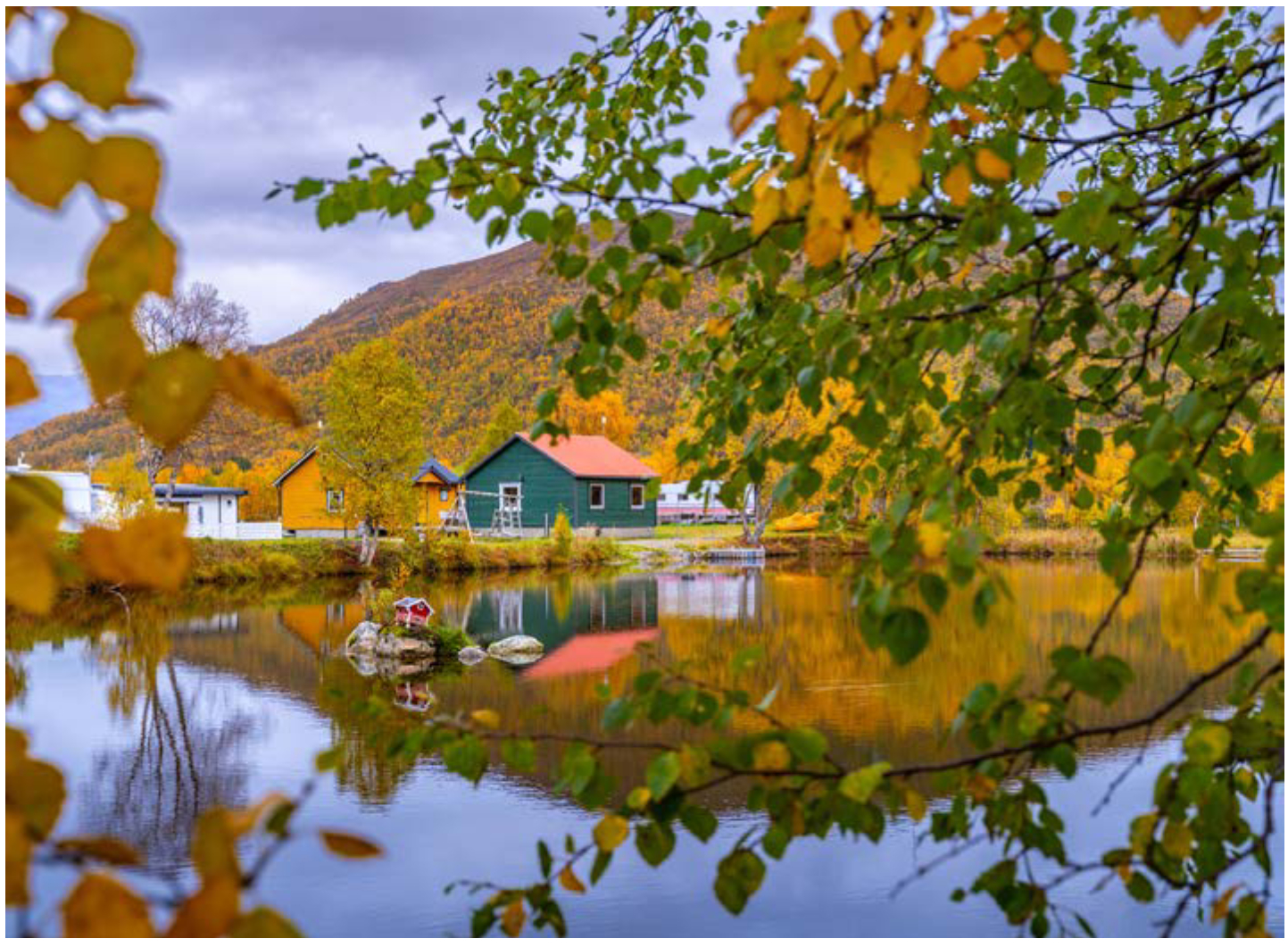
lake near Stryn. The waterfalls were something else; some spilled down the mountainsides and disappeared into the lake below. Others ran so close to the roads that our car got sprayed.
We happened to rent a house right next to a waterfall. Beautiful? Absolutely. Did I sleep the first night? Not much. I'm not used to hearing the sound of gushing water right outside my bedroom window. Apparently, even paradise takes a little getting used to.
Our rental also had a floating sauna on the lake, which my boys absolutely loved. They'd sit in the hot sauna, plunge straight into the cold lake, then climb back in to warm up, only to repeat the whole thing.
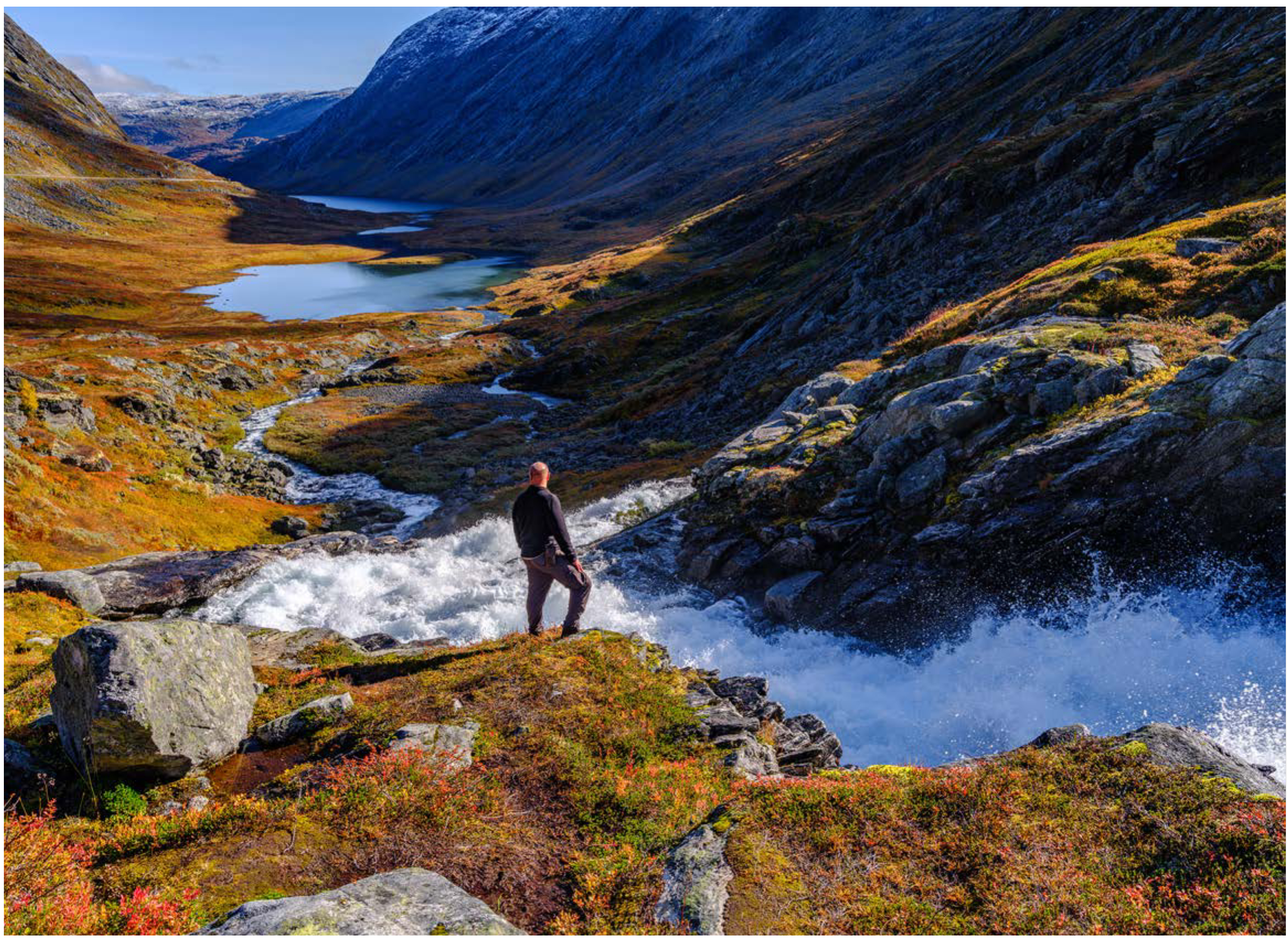
And then there was the color of the water.
The lakes and rivers around Stryn were an unbelievable turquoise. Not slightly blue or green, but bright turquoise. Your brain has trouble accepting that the color is real. It looks like something at Disney World, where someone has added dye to make the water look pretty.
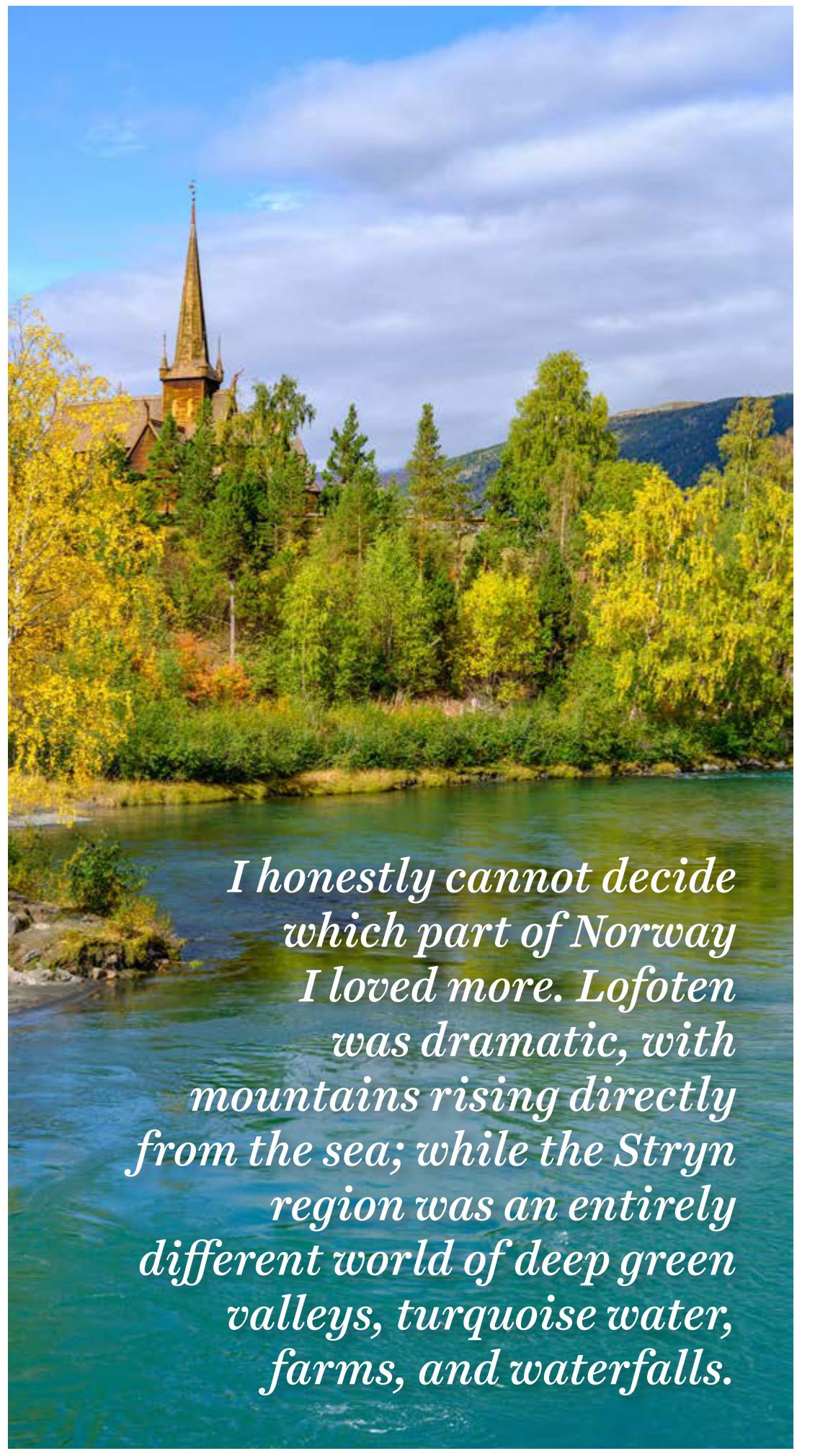
I honestly cannot decide which part of Norway I loved more. Lofoten was dramatic, with mountains rising directly from the sea; while the Stryn region was an entirely different world of deep green valleys, turquoise water, farms, and waterfalls.
But then you drive into another town, cross another bridge, look into another river, and the water is the same turquoise color.
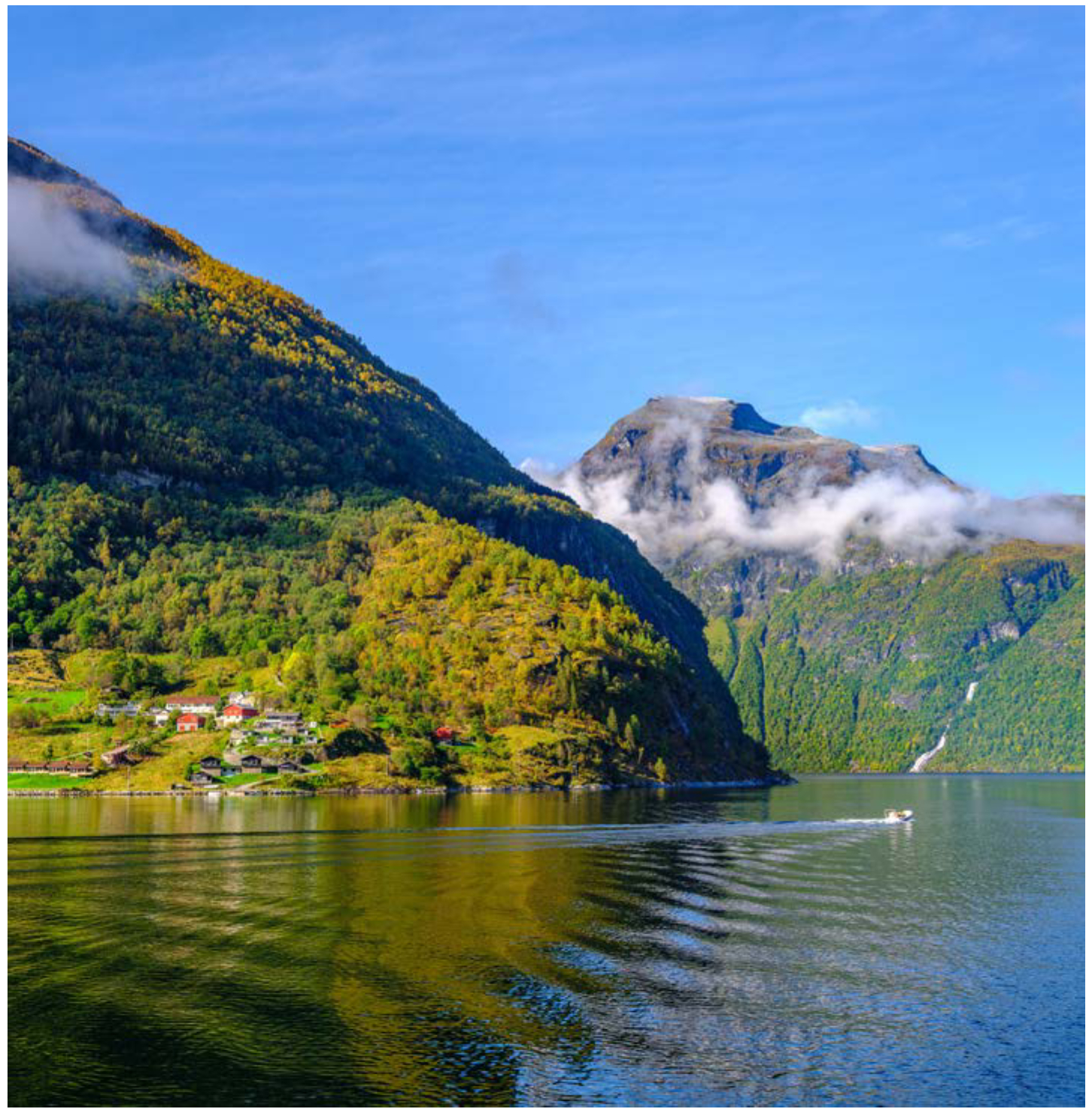
The Geiranger region is famous for its fjord, which is surrounded by towering cliffs with waterfalls pouring down their sides.
Rather than booking a separate sightseeing cruise, we took the regular ferry from Hellesylt to Geiranger and enjoyed the same magnificent scenery while getting to our next destination. Two birds, one stone.
From Geiranger, we followed scenic Route 63 toward Dalsnibba, winding our way up the mountains and straight into the clouds.
First came Flydalsjuvet, with spectacular views over Geirangerfjord, then Knuten, the historic loop in the mountain road.
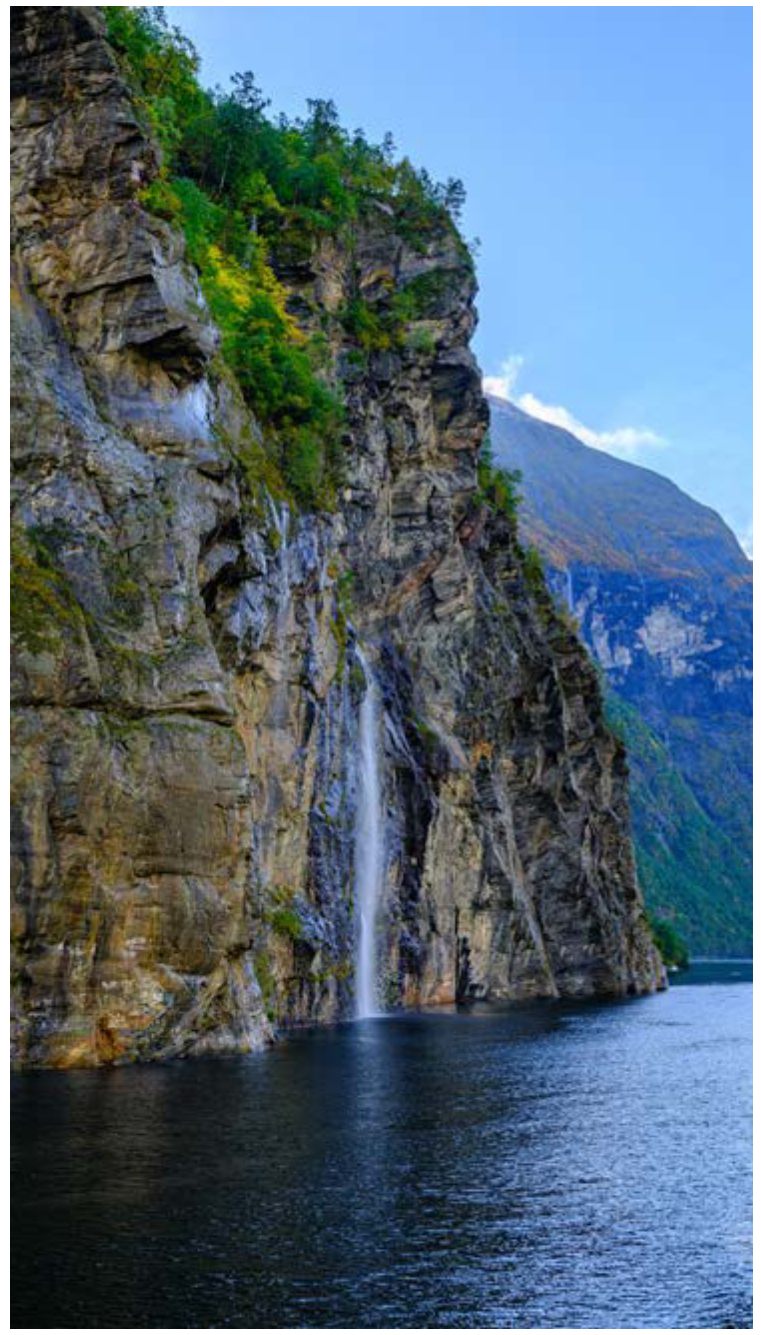
Along the way, enormous waterfalls dropped hundreds of feet down, and there was even an old farm perched on the edge of a cliff. I couldn't help wondering how people managed to live and work in places like that!
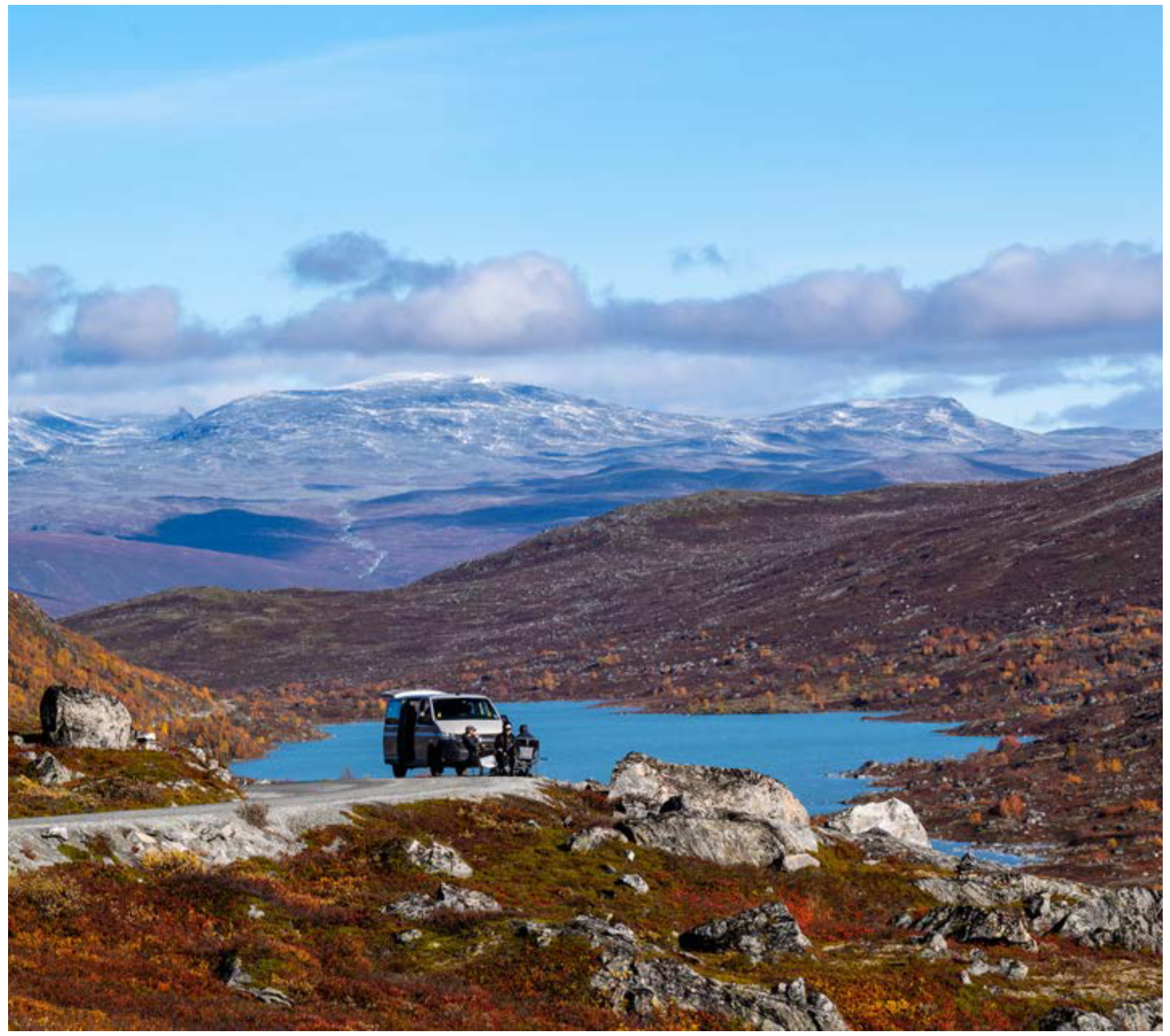
As we climbed higher, the green valleys were replaced by mountains, thick fog, and the beautiful Lake Djupvatnet, which was surrounded by towering peaks. We didn't have a particular hike planned. We simply parked wherever there was a pull-off and explored.
Electric car charging was the only occasional headache, since some stations weren't particularly friendly toward American credit cards. Circle K became our good friend.
Taste of Norway
Now, let's talk about food. Norwegian food was wonderful! Everything tasted fresh and real. Yes, your burger might cost $28, but at least it's a very good burger.
And the pastries! Norway could be a destination just for its bakeries, especially for someone like me who doesn't understand the obsession with putting cinnamon into everything. Norwegians love cardamom, and apparently, so do I.
I enjoyed their pastries so much that I bought Norwegian baking books—in Norwegian, naturally—to bring home. I figured that was the best way to get the original recipes before someone added cinnamon. ChatGPT and I will be doing some serious baking.
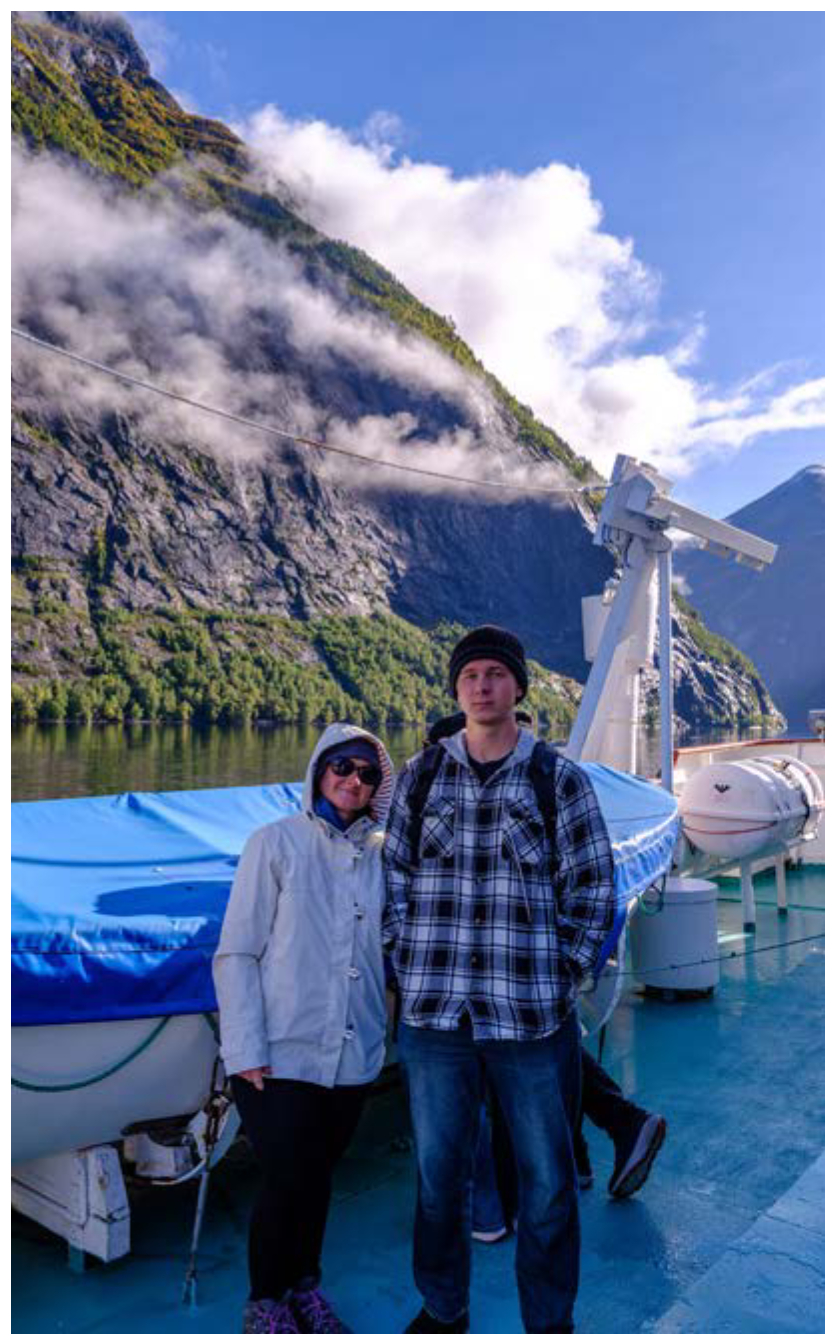
One more thing worth mentioning is the people. Norwegians were incredibly friendly, welcoming and helpful. Almost everyone spoke English, and not once did I feel uncomfortable or out of place. The whole country was remarkably easy and pleasant to travel through, which made our experience even better.
And what about the northern lights? We specifically chose September hoping to see them without dealing with winter. The first aurora alert arrived on my phone after we'd already left Lofoten, and we didn't see them in the Stryn region either.
But honestly, I didn't mind. My eyes had already seen plenty of wonder. Missing the northern lights hardly felt like missing anything.
Would I go back? Absolutely! I spent 35 evenings planning this vacation, only to come home with a list of places I still hadn't seen. I already know which pastry I'm buying the next time I land in Oslo, which areas I want to revisit, and which hikes I might attempt now that my legs have finally forgiven me.
I would happily go back tomorrow. There's just one little problem.
There's an entire world still left to see. CS It takes about two weeks after vaccination for antibodies that protect against the flu to develop, so getting vaccinated before flu activity increases can provide important protection throughout the season.
While the flu may cause mild illness for some people, it can lead to serious complications, hospitalization and even death.
During Maryland’s 2025-2026 flu season, which began Sept. 28, 2025, 5,939 people were hospitalized with influenza. The state also reported 168 adult deaths and one pediatric death associated with the flu.
“While flu vaccination remains our best method for preventing serious illness and keeping our community healthy, it is also important to follow other prevention methods,” Higgins said. “These include staying home when you are sick, covering coughs and sneezes, washing your hands frequently and avoiding close contact with others when you have respiratory symptoms.”
Flu vaccines are available at TidalHealth Community Pharmacy locations:
North Ocean Pines 11101 Cathage Road 410-543-4769
South Ocean Pines 10614 Racetrack Road, Suite 7 410-629-6240
Berlin 9733 Healthway Drive, inside TidalHealth Atlantic 410-641-1100
The following are all flu symptoms, though someone doesn’t have to have all of these to have the flu, even a fever, according to the CDC.
• Fever or feeling feverish/chills • Cough • Sore throat • Runny or stuffy nose • Muscle or body aches • Headaches • Fatigue (tiredness) • Vomiting and diarrhea (more common in children than adults)