
Calendar ducks and stubborn geese keep October interesting
Making the most of mid-season
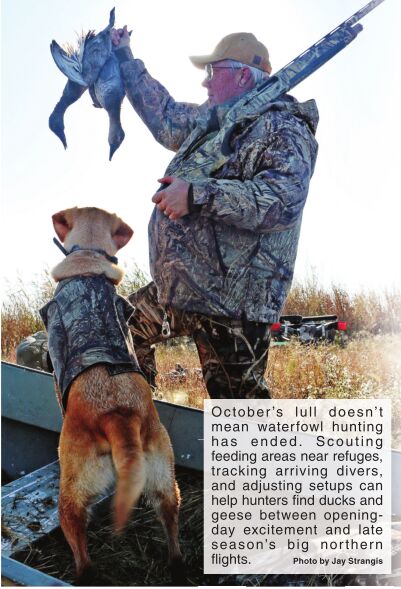
October’s lull doesn’t mean waterfowl hunting has ended. Scouting feeding areas near refuges, tracking arriving divers, and adjusting setups can help hunters find ducks and geese between opening-day excitement and late season’s big northern flights. Photo by Jay Strangis
Midwest waterfowl hunters who find themselves singing the mid-season blues in October may turn to dog training sessions or decoy touch up. The truth is, hunting slows down after the opening few weeks, but that doesn’t mean there’s not duck or goose hunting to be found. Although the local mallard hole, wood duck haunt, or Canada goose field may feel abandoned, there are birds out there.
Many hunters aren’t aware that some waterfowl are truly calendar birds. Canvasbacks, for instance, leave Canada’s prairie provinces like clockwork in the middle days of October..
Redheads also are mid-October migrators, though not as calendar precise as canvasbacks and generally seen in more westerly locales. And there will always be some mallards in the mid-season, just don’t expect to see them in the flocks we see later in the fall.
Another dependable early migrant is the ring-necked duck, often referred to as ringbills. These birds of the boreal forests may pile up on major refuges, especially where there is wild rice in the vicinity (and this year’s crop was good).
The key to finding mid-season birds is knowing where they will appear. Refuges are a key starting place for mid-season hunters. The refuge supplies the roosting area but seldom has enough food for the birds. This offers hunters the chance to find where birds are going to feed, usually within a 5- or 15-mile radius. Their destination may be a rice lake, a pothole with freshwater shrimp or an agricultural field.
A good mid-season practice is to keep your expectations in check. This isn’t opening day with its repeating salvos, or the late season when a large flock of northern mallards is going to cover you up. It’s more like a game of chess in which you wait for your opponent’s next move.
Be realistic in your mid-season quest. If you are hunting divers, you are likely to get most of your action in the first hour or two of a morning hunt. If you are targeting mallards, you might find that patience pays. If the hunting is good, go back the next day. You may see new bunches of birds from the same refuge roost.
A mid-season duck hunt in new territory often requires a do-over. Perhaps you’re on the right body of water, but in the wrong spot. You may scratch a bird or two but realize you’re not on the X indicated by incoming birds. Remember that if you are near a refuge, you are only seeing a small fraction of available birds. In that case, returning the next morning for a rematch might be worthwhile.
Mid-season geese
For Canada goose hunters, the game doesn’t just end after a few rounds. As most goose chasers know, Canada goose flocks are stubbornly resilient. They may get pushed out of one field or one roost after another, but that doesn’t mean they’ve abandoned the area. However, they do get harder to hunt.
Geese aren’t hard to find, but that is job one. Unless you’ve got an uncle with a big farm, you’re not likely to just spot geese in a field that hasn’t already been claimed by some local guide or hunter. That means it’s time to get creative.
One way to take lazy geese is to waylay them on their way to or from a field. If they are comfortable, they may be following a tree line not claimed by another hunter. A polite request to that landowner may get you a morning pass shoot. In other instances, watching as corn comes off fields may also make you first in line to set up on a feeding flock.
Too, if there is empty water next to a known roost, it might be possible to set a small water spread that imitates a resting flock and draw returning birds to your setup. It is also possible, with good camo, to float, via kayak, small rivers that hold resting geese or ducks in the riverbends and have some success.
Want a guide? Fergus Falls, Minn., has long been a goose highway for migrating Canada geese. The area has many goose outfitters however, so freelancing is out of the question. But, if you want to pay to play, it’s likely worth the price of admission.