
Knock, knock, knocking… on the door of prime time
A ‘shotgun’ approach to archery treestand hunting
Ryan Rothstein
It seems like just yesterday that I was placing my cameras for the year and waiting on bow season. Yet here we are, with prime time barreling around the corner. The deer certainly are ready for it, because the volume of scrapes and rubs absolutely has exploded in the past 10 days. I’ve also seen some real dandies taking a dirt nap in my neck of the woods, making for some happy hunters.
If they haven’t already in your locale, bucks are going to start getting bold and likely will get more reckless with each passing day from here forward. It’s a real game of cat-and-mouse moving forward, but I like to be strategic as I plan out the grind for the next few weeks.
I still stress a light pressure approach even though the deer are getting more active. As the rut gets cranking, yes, you could get lucky and shoot a Booner while standing next to a fence post. Stupid things happen, but I’ve never liked relying on luck to fill my tag. I’d much rather hedge my bets and hunt where the deer are telling me to be and try to keep them unaware of my presence in the process.
This is why I work to have multiple spots to pick from when prime time arrives. I know so many hunters that sit the same couple of stands over and over and over, and like I said, you can get lucky anywhere, but that kind of pressure adds up. Even if you aren’t directly spooking deer from the stand, you’re leaving a lot of scent in the woods on your way in and out and during all that treestand time.
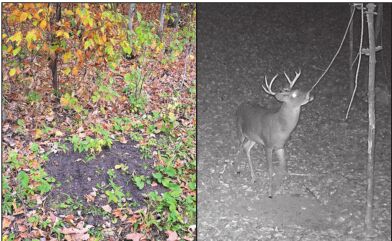
Despite warmer-than-average temperatures, whitetail buck activity has begun ramping up in recent days. Photos by Ryan Rothstein
On private ground where I’m running cameras, I try to base my moves on what the deer are showing me. I’m already seeing a few older bucks that are on the verge of killable, meaning they’re popping up on cameras at the fringe of legal light in the morning and evening. If I start to see any consistency to this, it’s worth putting in a sit or two based on where I predict they’re heading.
I also like to have a half dozen public land spots that I can hit on a whim throughout the fall based on weather, food sources, and what I’m seeing during sits. It’s highly valuable to see the levels of pressure that an individual property is receiving, along with finding out if my “secret spots” on a given property are on anyone else’s radar. This is some of the most valuable intel I can have, because it tells me whether I should keep investing time in a spot. If someone else is onto it, I usually bail for greener pastures. Above all else, public land requires finding spots that aren’t receiving regular human traffic.
To me, the real beauty in this multi-property, multi-spot strategy is its flexibility. If time were no object, I could theoretically hunt every single day and not blow out any given spot, because I’m bouncing around so often. It also in effect lets me hunt multiple different deer herds, again maximizing opportunity because I’m not trying to chase down a single buck, but I hope one of several across the different areas.
If hunting this way seems like a scattershot method of approaching deer hunting, you’re right. I view this as the shotgun approach – I’m trying to scout/hunt at least a few different areas and deer herds to get on a buck that I want to kill. It’s not feasible to keep up hunting this way through the rut, because I’m not learning enough about each spot to really give myself a fair shake at connecting on a buck.
But if I get eyes on a good one or start seeing red-hot sign that indicates a mature buck is using an area frequently, that’s when the game begins and it’s time to start dialing in.
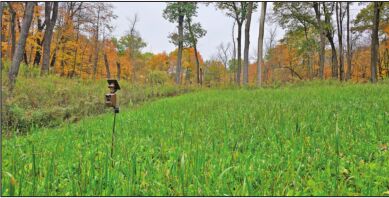
Trail-cam action for most of the year mostly just provides fun wildlife-watching images. On the verge of the rut, however, they provide closer-to-real-time data that can influence your tactics.
I need to clarify exactly what I mean by red-hot sign. If I’m seeing torn-up scrapes near a road or along a field edge, I make note of it, but I generally don’t spend time hunting these. Odds are nearly certain that these are getting torn up at night, and if they’re that close to a road, parking area, or field, someone else is probably sitting on them. Let them; those aren’t the kinds of scrapes I want to hunt anyway.
I’m talking about scrapes in cover where you find either a monstrous scrape that reeks like a buck, or a pile of scrapes and rubs within a small area. These are the spots worth investing some treestand time. If nobody else is sitting on them and if they’re within cover that you reasonably suspect nobody else is bothering, odds are much better that deer are visiting these areas during shooting light.
If I’m seeing a buck that I want to shoot, I like to go back
(From Page 10)
to the computer after the hunt and pore over aerial imagery to see if I can decipher what he's likely up to. I obviously don't want to blow him out of his bed, but I also want to get as close as possible to maximize my odds that he gets up and passes by during legal light. This is tricky with a bow, but it's important to make your best educated guess and go with it. Now isn't the time for too much second-guessing.
Another prime factor with this whole strategy is the balancing act of giving a spot a fair shake but not wasting too much time in an unproductive spot. There's no answer that applies 100% of the time; it's all subjective. If I'm seeing deer and having encounters that I think could lead to a shot opportunity, I'll keep picking at the spot. If I'm hunting what seems to be red-hot sign but I'm not seeing any deer while hunting, it's time to think hard about pulling stakes and finding something else. Every day is precious, and each day gone is a day closer to the mayhem of firearms season. It doesn't matter how fresh the sign seems to be if you aren't seeing deer during daylight.
Knowing how important every sit is moving forward, I try really hard not to overthink things. It's so easy to get in your own head and second guess every move you make, but this has hurt me more than it's helped me. I try to listen to my gut feeling while incorporating the information I'm gathering with each sit and make the best decisions I can with the information I have on hand.
Keep plugging away. Things are going to change and you'll have to pivot at certain times, but the main thing is to keep making the moves that make sense and try to get a little closer to letting an arrow fly with each sit. With any luck, eventually that opportunity is standing 25 yards away.