
Why some pheasants flush differently
Wild and pen-raised pheasants don’t always respond the same way
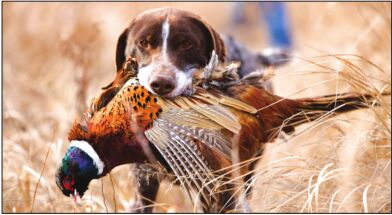
Genetics play a role in how a pheasant behaves when a bird dog or hunter approaches – but the ringneck’s own experiences play a major part in its reaction.
Put a pointing dog on a pheasant and the dog suddenly freezes. Put a flushing dog into the same cover and the bird may explode from the grass seconds later.
Now change the pheasant.
A wild rooster that has survived predators, weather and previous hunting seasons can behave differently from a recently released pen-raised bird. The differences can involve how close a person or dog can approach before the bird flushes, whether the pheasant runs or flies, how far it flies and where it lands.
The reason is straightforward: a pheasant’s behavior is influenced by both genetics and experience – and wild birds acquire considerably more experience with danger before they encounter a hunter.
Wild birds learn to survive
A wild pheasant grows up around hawks, owls, foxes, coyotes, raccoons, people and other potential threats. Survival depends on detecting danger and choosing the right response.
Commercially raised pheasants, which are more common afield in states like South Dakota and Wisconsin, generally grow up in more protected environments. Research on released pheasants has found that captive-rearing conditions can limit opportunities to develop predator-recognition and avoidance behaviors. They can also provide less opportunity to develop flight muscles and the physical skills needed to escape predators.
That does not make a pen-raised pheasant “tame.” Experience after release can change its behavior. But a freshly released bird and a wild rooster that has survived several hunting seasons do not necessarily begin with the same level of wariness.
How close can you get?
Scientists often measure an animal’s response to danger using flight-initiation distance – the distance between an approaching threat and the point at which the animal flees.
Direct experimental comparisons of wild and pen-raised ring-necked pheasants are limited, so there is no scientifically defensible number of yards that separates the two.
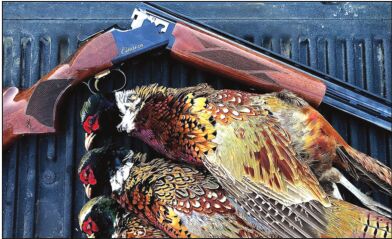
Hunting wild pheasants versus pen-raised pheasants is different for both dogs and hunters, with new research providing clues in what sets the birds apart. Photos courtesy of Bill Key
Research on captive-reared gamebirds, however, provides useful evidence. In one controlled study involving prairie-chickens, wild birds flushed at greater distances from approaching humans and dogs than pen-reared birds. Wild birds also flew farther after being flushed. The researchers concluded that captive rearing was associated with deficiencies in predator-avoidance behavior and flight performance.
The study involved prairie-chickens rather than pheasants, so its numbers should not be transferred directly to ringnecks. But it demonstrates an important principle: rearing, environment, and experience can influence how a gamebird responds to a predator.
Research specifically involving pheasants has likewise documented poorer flight and escape performance among captive-reared birds and substantially lower survival after release than in wild birds.
A dog changes the encounter
A hunter walking through a field and a hunting dog working through cover present different threats. A dog can smell a pheasant that the hunter would never see. Its low, erratic movement through vegetation also can resemble the approach of a ground predator. For a wild pheasant, that is familiar territory.
An experienced rooster may hear the dog, run ahead through cover and remain hidden. It may flush only when the dog gets close – or keep running until the dog points an empty patch of cover.
A pen-raised bird may be less likely to make those decisions immediately after release because it has had fewer opportunities to learn them. But experience matters. A released pheasant that has survived several weeks or months in the wild may become considerably more wary than a bird that has just left the release pen.
Pointing vs. flushing dogs
The type of dog also changes the encounter. A pointing dog locates a pheasant and stops, allowing the hunter to approach. That gives the bird more time to decide what to do. A wary pheasant may remain hidden, crouch tightly, run ahead of the dog, or relocate before the hunter arrives. This is one reason experienced wild pheasants can produce spectacularly long “walks” for a pointing dog.
A flushing dog, by contrast, is expected to work close to the hunter and force birds into the air. The pheasant has less
time to remain stationary once the dog enters its immediate escape zone.
There is not enough controlled research on pheasants to claim that wild birds respond systematically differently to pointing dogs than pen-raised birds. But their different levels of experience with predators can influence the sequence of behaviors a hunter sees – holding, running, relocating and finally flushing.
What about retrievers?
The important distinction is generally pointing versus active flushing behavior, rather than one breed of dog versus another.
A retriever used to flush pheasants can put essentially the same type of pressure on a bird as another flushing dog. A retriever sent after a downed pheasant presents a different situation: the bird already has been flushed or shot.
Consequently, there is little reason to expect a pheasant to have a fundamentally different response simply because the dog chasing it happens to be a Labrador rather than a pointing breed. What matters is what the dog is doing.
Flight distance isn’t the whole story
A pheasant that flushes farther away does not necessarily fly farther. Flush distance and flight distance are different behaviors. Once airborne, flight distance can be affected by age, sex, physical condition, flight-muscle development, wind, temperature, cover, hunting pressure and whether the bird already has been disturbed.
So a wild pheasant’s advantage is not simply that it can fly farther. It may detect danger earlier, make a better escape decision, fly more effectively and select better landing cover.
Where the pheasant lands matters
Escaping the hunter is only part of the challenge. The pheasant must survive after landing. Wild birds know their surroundings. They have learned where dense grass, brush, cattails, crop residue and other protective cover occur. A recently released pheasant has had less opportunity to acquire that knowledge.
That difference can have consequences. Studies of released pheasants have documented substantially poorer survival among pen-raised birds than wild birds. In an Idaho study, survival of wild females was much higher than that of pen-raised females released into pheasant habitat. Researchers have linked the difference to the ability of wild birds to cope with predators and their environment.
Rearing matters, too
“Pen-raised” is not necessarily synonymous with “poorly prepared.” Research indicates that captive environments can influence pheasant development. More complex rearing environments, opportunities for natural behaviors and flight conditioning can improve characteristics associated with survival.
That suggests an important lesson for release programs: how a pheasant is raised may influence how well it adapts after release.
Experience count
There is no magic flush distance that identifies a wild pheasant. Some wild birds flush close. Some pen-raised birds become extremely wary after spending time in the wild. But the biological explanation for behavioral differences is clear. Wild pheasants have spent their lives learning how to survive. Pen-raised pheasants have spent at least part of their lives protected from many of the dangers they encounter after release.
Put a pointing dog on each bird and the difference may appear in whether the pheasant holds, runs or relocates. Put a flushing dog into the cover and it may appear in how quickly the bird flushes and how strongly it flies. Put a retriever on a downed bird, and the pheasant’s origin becomes far less important than what happened during the initial encounter.
The real difference between a wild and pen-raised pheasant isn’t simply how far it flies. It is everything the bird has learned before it ever takes wing.