
Freedom to roam: Ice fishing from a hot tent
Hearty backcountry tents provide the ultimate basecamp
Freedom to roam: Ice fishing from a hot tent
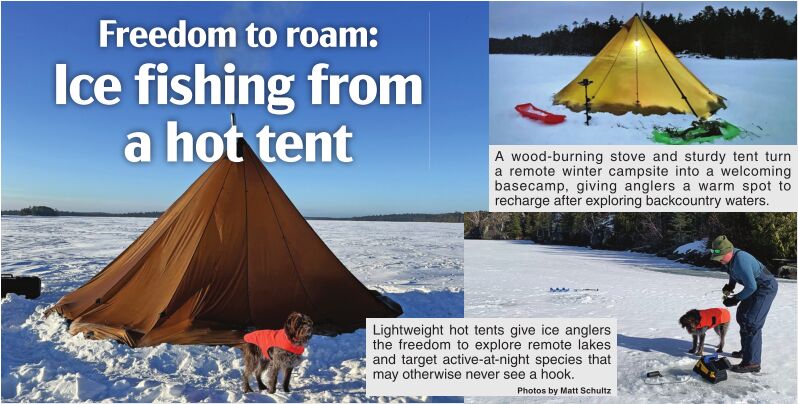
I’ve been using hot tents in the backcountry for years. Call it romanticizing, but there’s something special about watching smoke roll from your chimney after a long, cold day of fishing and hunting. The inner “Jeremiah Johnson” seems to emerge from everyone I’ve ever shared this experience with, and rightfully so.
Heating a shelter with a wood stove in the great outdoors is a time-honored, battle-hardened tradition that is alive and well in places like Minnesota’s Boundary Waters Canoe Area Wilderness and other north country destinations.
While the types, styles, and materials have changed over the years, the reasons for packing a tent and stove into the backcountry remains the same. You simply cannot beat the reliability and comfort of a wood stove and a good shelter, especially when you’re fishing hard water in the wild. The following are some of my recommendations and observations gathered over the years.
The set-up
I personally enjoy nylon hot tents because of their reduced weight, quick drying, and simplicity; however, these tips and tricks will work for canvas tents as well. Regardless of your preferred style and brand, the most important step is to test your equipment in favorable conditions before you head into the backcountry in freezing temperatures.
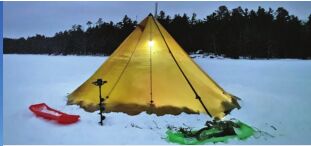
A wood-burning stove and sturdy tent turn a remote winter campsite into a welcoming basecamp, giving anglers a warm spot to recharge after exploring backcountry waters.
I can’t stress this enough and, speaking from experience, knowing your gear ahead of time can be the difference between just surviving and having a great trip.
Once you’re familiar with your gear, you’ll need to decide where you’d like to fish and how to pack accordingly for getting there. If the weather allows and you’re not pressed for sunlight, keep some tip-ups near the top of your sled or pack to set out while you rig your tent. This will give you an idea of how far from camp you’ll need to focus your efforts.
I have camped both directly on the ice and on shore, and can offer this recommendation – if it is so cold that you’ll be going through endless amounts of wood in your stove, staying close to the woods will save a tremendous amount of energy. Dragging your sled across the ice in the middle of the night because you underestimated how much fuel you’d need is an unpleasant task.
That said, the obvious advantage to sleeping on the ice is the ability to fish from the comfort of your bed. This is particularly advantageous during late-night walleye and burbot fishing.
This leads perfectly into another critical aspect of maintaining a comfortable hot tent; you can never have too much wood to feed the stove. Not all wood is created equal, and if the only downed trees you have access to are pine – you may be burning through your stores at a rapid rate.
Bring a saw and hatchet, measure the size of your stove ahead of time, and prepare a considerable amount of wood that you won’t have to cut to size when you need it at 2 a.m. This can take a couple hours, but is another great excuse to have some tip-ups out while you toil.
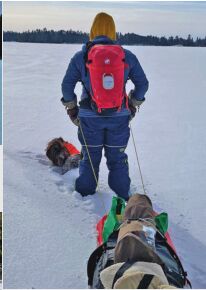
Comfortable hot tent camping starts before the trip. Testing equipment, choosing a practical campsite, and preparing plenty of firewood help keep the focus on fishing and enjoying the backcountry.
With the right layout, you should be able to easily add wood from your sleeping bag.
Choosing a tent
Most of the choices we make when purchasing outdoor equipment, like anything else in life, is based on personal preference. Canvas wall tents have kept armies and outdoorsmen warm for hundreds of years, and for good reason. They insulate well, aren’t easy to rip or pierce, and are abundant
(From Page 31)
on the market. The con? They out-weigh nylon options considerably and, once soaked, can remain soaked for a long time and develop mold easily.
I often use a 12-person nylon tipi-style tent because I do, in fact, like to fish in my tent. The huge footprint allows me to divide the space into compartments - fishing, eating, sleeping. To achieve that size of a footprint with a canvas tent would require double or triple the weight of my 14-pound set-up.
If I don’t have much ground to cover, or have access to sled dogs, then the weight doesn’t matter as much. In my experience, the saved weight starts to matter on tough portages, in deep snow, and with tired legs.
With these considerations in mind, all that’s left to do is pack a high-quality sleeping bag and pad or cot, double check your fishing gear, and head out onto your lake of choice.
One of the great features of hot tenting is the freedom to roam. When you know you’ll have a warm, dry shelter waiting for you – taking day-trips to new fishing spots becomes more tenable. As you sip your coffee and watch the sun rise over the pines in complete silence, remember that somewhere nearby, likely in your state, is a lake with a thousand trucks, snowmobiles, trailers, and shacks running generators for their TVs and microwaves, all to catch the same fish they probably hooked that summer.
Take great pride in your willingness to strike off into the wild and do things the old-fashioned way.