
Author spills the beans on legume's legacy
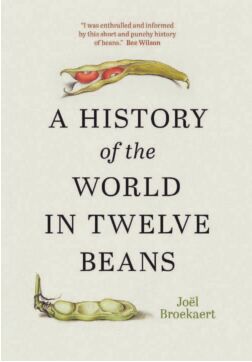
A History of the World in Twelve Beans By Joël Broekaert, translated by Michele Hutchison Greystone Books, 168 pages, $33
IMAGINE a piece of pita bread into a plate of hummus weighing over 10,000 kilograms, part of an ongoing food war between Israel and Lebanon — one fought for Guinness World Record supremacy.
The story of this massive plate of food is only one of the anecdotes that food expert Joël Broekaert includes in A History of the World in Twelve Beans as he examines the influence of beans in world history and how they could influence the future.
Broekaert is a Dutch restaurant critic, author of several books on food and culinary journalist with a background in the study of history. He is also a TV and podcast presenter, as well as a judge for the Dutch edition of Celebrity MasterChef.
In this short book, Broekaert examines how various beans have influenced world history, from soybeans in the Chinese empire to chickpeas (also known as garbanzo beans) in the Middle East. He begins with a general introduction to the importance of food in determining where and how people live, their level of specialization and much more. "(F)ood has often been the catalyst for new ways of organizing society, for industrial development, for war, for geopolitical competition, for military and economic expansion," he writes. Even language has been influenced by food — take the word "salary," for example, which comes from the Latin word for salt.
Domestication of plants has allowed people to have dependable sources of food, Broekaert explains. Peas and lentils were among the first plants to be farmed, growing in the Fertile Crescent between Mesopotamia and Egypt and leading to communities gathered around farms. Meanwhile, other areas of the world began to domesticate corn, beans and other plants. Peas gained a new importance in the work of 19th-century monk and biologist Gregor Mendel, whose work helped to explain genetics and inherited characteristics.
Also covered by the author is the role of beans on their own as a meat substitute, the bowl of lentil stew in the Biblical story of Jacob and Esau, the significance of fava beans in Greek philosophy, Roman bean consumption and Holy Roman Emperor Charlemagne's mandates to grow beans are among the topics the author covers.
Broekaert notes fava beans were instrumental in helping Europe recover from the poverty and food scarcity that depleted populations in the Dark Ages. In China, people found ways to make the normally poisonous soybean edible, which led to the famous sauce.
Most of the world's beans originated in the Americas, including green beans, kidney beans and white beans. Besides being a good meat substitute in areas with few large animals, beans are adaptable to different altitudes and growing conditions, while their roots help fix nutrients in the soil. Cocoa and coffee beans, while not technically beans, have also had a role in both slavery and the spreading of Enlightenment ideals.
Beans were the first foods to be preserved in cans, helping fuel the Industrial Revolution. Black-eyed peas became associated with Black emancipation, while chickpeas have become a symbol of the struggle between Jews and Palestinians. In the future, the highly nutritious lupin bean could even reverse climate change.
A History of the World in Twelve Beans is a very readable and often amusing book, with many stories and anecdotes supporting the author's thesis. While not everyone may agree with his call to substitute beans for meat, Broekaert makes a compelling case, with notes and a selected bibliography for further study.
Celebrity chefs, avid bean consumers and history enthusiasts alike will enjoy this book.
Susan Huebert is a Winnipeg writer and pet sitter.