
First Nation taking federal government to court over damage to sturgeon population
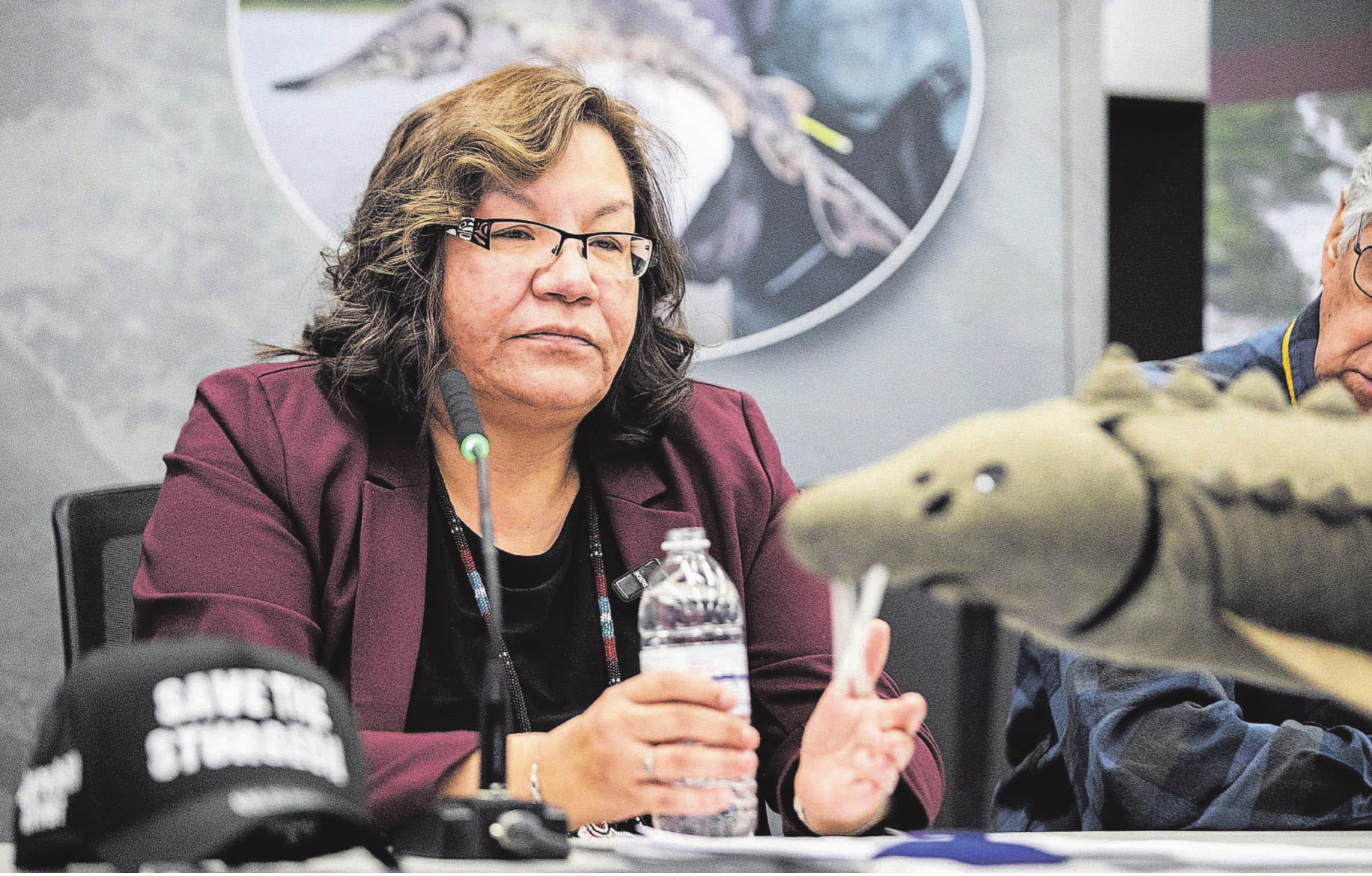
Tataskweyak Cree Nation Chief Doreen Spence says Canada violated the First Nation’s treaty rights with the construction and operation of the Churchill River Diversion.
A REMOTE Manitoba First Nation is taking the federal government to court over claims a Manitoba Hydro project is hurting the sturgeon population in the lower Churchill River.
In an Oct. 15 statement of claim filed in Manitoba’s Court of King’s Bench, Tataskweyak Cree Nation said the Churchill River diversion operated by Manitoba Hydro has had widespread ecological effects and damaged sturgeon populations in the area.
The lawsuit alleges Ottawa has breached its treaty obligations to protect the community’s right to harvest the fish.
The lawsuit names both His Majesty the King in Right of Canada, the ministers of fisheries and oceans Canada as defendants.
“When our relatives entered into Treaty 5 with the newcomers, there was a trust which has long since been broken,” said Tataskweyak Chief Doreen Spence in a news release.
“We are still willing to uphold our part of the treaty. However, Canada has not lived up to its end. Our treaty rights were violated the moment construction started on the Churchill River Diversion system.”
The diversion sends water from the Churchill River to the Nelson River basin to generate hydro power.
Populations of the fish — which are considered sacred ancestral beings by the Cree Nation and can grow up to three metres and weigh up to 180 kilograms — have been struggling for 50 years, the court papers say.
“Tataskweyak Cree Nation people hold responsibilities under their natural laws to protect and care for mana’o, the sturgeon of a sacred, free-flowing lake sturgeon by their Cree name.”
“Mana’o have always been central to TCN’s identity, laws, culture, ceremonies, healing practices and communal way of life. The ability to harvest mana’o was, and remains, vital to TCN’s physical, spiritual and cultural well-being.”
It also wants the federal government to acknowledge what it says is its failure to uphold its treaty obligations to the Cree Nation.
“Mana’o require different habitats during each stage of their life cycle,” the statement of claim says.
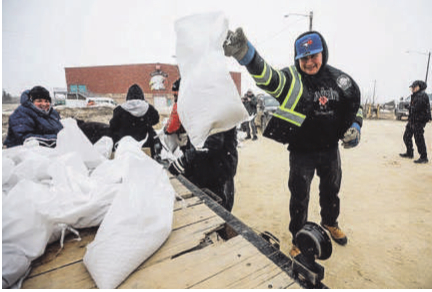
Premier Wab Kinew leads sandbaggers on a trail at Peguis First Nation in April.
“Suitable spawning, rearing, feeding, migration and overwintering habitat depends on adequate river flows, appropriate water depths and velocities, suitable riverbed substrate, connectivity between different parts of the river system and a predictable seasonal flow regime.”
The lawsuit details how elders of the Cree Nation recalled flourishing populations of sturgeon prior to the diversion’s construction.
“The diversion was responsible for ‘fundamentally changing the natural flow and regime of the river,’ the lawsuit claims, noting that only a small and vulnerable population of sturgeon remains near the confluence of the Churchill River and the Little Churchill River.
In the mid-2010s, a moratorium on harvesting the fish was imposed, which was a “significant sacrifice” for the 4,400 members of the First Nation, the court documents say, adding there was a ceremonial harvest in 2020, but it’s the only one that has taken place since the ban was put into effect.
“Many TCN members, especially youth, have never had the opportunity to harvest or be nourished by mana’o,” the statement of claim says.
Tataskweyak released research earlier this year that suggests changes to the hydro operation could help protect the fish population, if the flow of water was altered to more closely reflect the river’s natural seasonal patterns.
The community says it sent that research to officials at Manitoba Hydro and the federal and provincial governments, but that the Crown corporation argues more study is needed. The public utility released a report on the matter in August that indicated the diversion has substantially altered the habitat conditions of the river, Tataskweyak says.
Fisheries and Oceans Canada declined to comment on the lawsuit while it filed before the courts. The government has yet to reply to the claim with a statement of defence.
— with files from Eric Pindera