
Hydro vows fewer city outages
Substation upgrades to improve system could take 20 years, cost as much as $1.2B
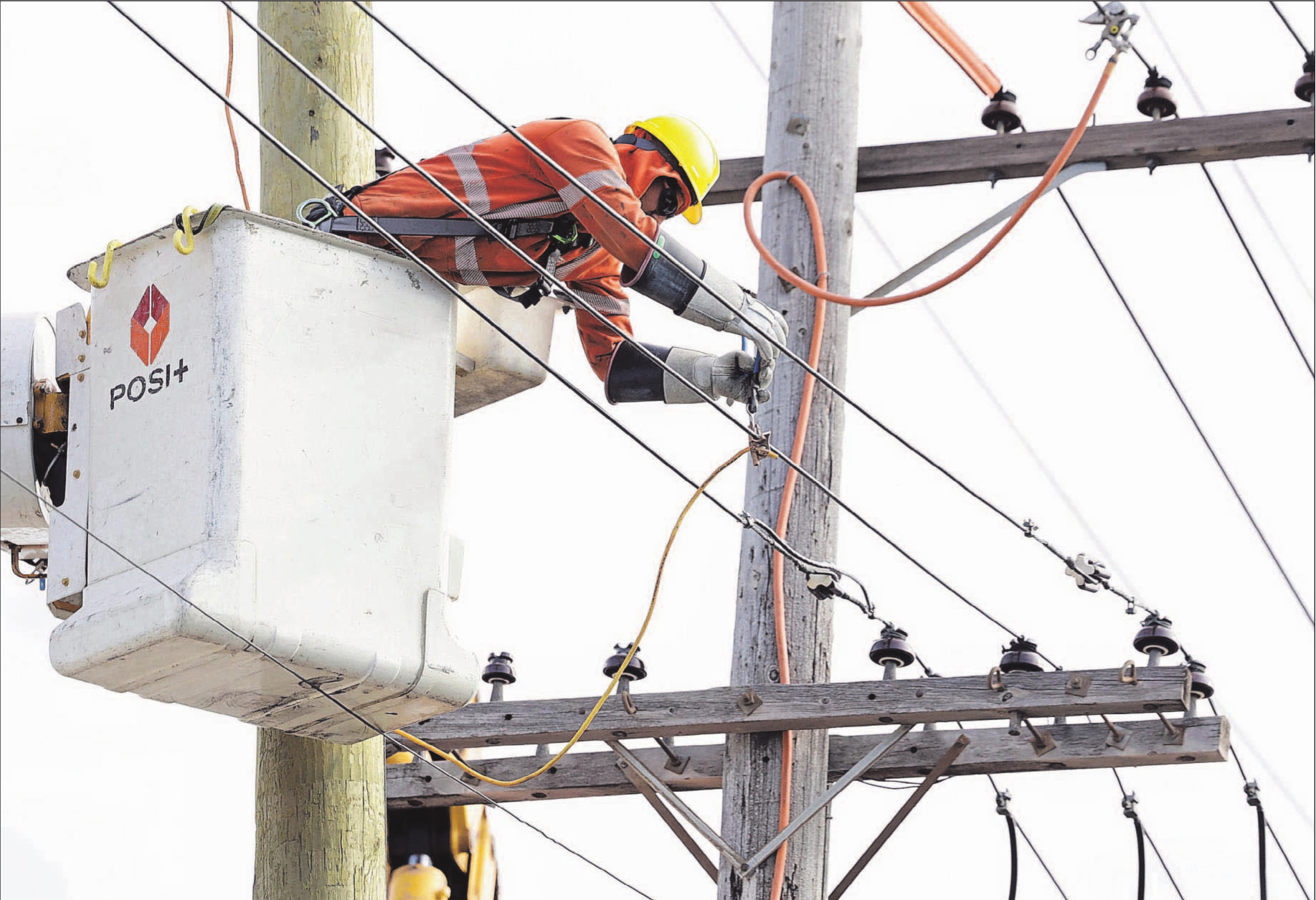
Manitoba Hydro employees work on a line on Sargent Avenue. Hydro is performing major upgrades in and around 41 electrical substations in Winnipeg, and one in Brandon.
Manitoba Hydro is promising fewer power outages in Winnipeg once it replaces or converts 41 electrical substations in a project the utility says will last up to 20 years and cost as much as $1.2 billion.
Spokesman Peter Chura said upgrades to the electrical distribution system will improve safety, reliability and resiliency, and reduce maintenance costs.
“We’ve been clear for a few years now that aging infrastructure is a challenge for the province going forward, so our programs like this are solving that problem incrementally,” he said Friday.
Many substations in Winnipeg are nearing the end of their service life or operating close to capacity. The upgrades will increase capacity, said Craig Sambrook, Hydro’s construction community liaison.
“It’s not just today, but it’s into the future as electrical demand from our various customers increases over the years,” he said.
Spring and summer storms resulted in many outages — some lasting days — in Winnipeg and other parts of Manitoba. Uprooted trees or fallen branches took out power lines in many cases.

Craig Sambrook, Hydro construction liaison: upgrades will increase capacity.
“When a tree falls on a line it’s probably going to result in damage and probably a power outage no matter what, but more modern infrastructure will withstand damage a little bit better and be less complicated to repair,” Chura said.
In addition to aging infrastructure, Hydro is facing a debt of $26.5 billion and projecting an electricity shortfall by the end of 2030. Drought has hurt Hydro’s finances.
The Crown corporation is waiting for the Public Utilities Board to deliver recommendations on a proposal to generate more power by installing three proposed natural gas-powered turbines in Brandon at an estimated cost of $3 billion. Other plans include Indigenous-led wind farms.
HYDRO, continued on B3