
A WELL-COMPOSED LIFE
Musician made great contributions, advocated for fellow artists

A LIFE’S STORY
When a University of Manitoba dean came to inform Victor Davies that he was booted from pre-med in the late 1950s, it was — to permit a cliché — music to his ears.
“In his mind, what he heard was much more encouraging. He heard, ‘Follow your own dream. Listen to your own inner melody. Speak with your own voice,’” says Davies’ daughter, Heather.
Davies, who died at 87 from pancreatic cancer and primary lateral sclerosis in late September, was nevertheless about to take a major gamble, one that would eventually earn him an honorary doctorate from the University of Manitoba and a nomination to the Order of Canada.
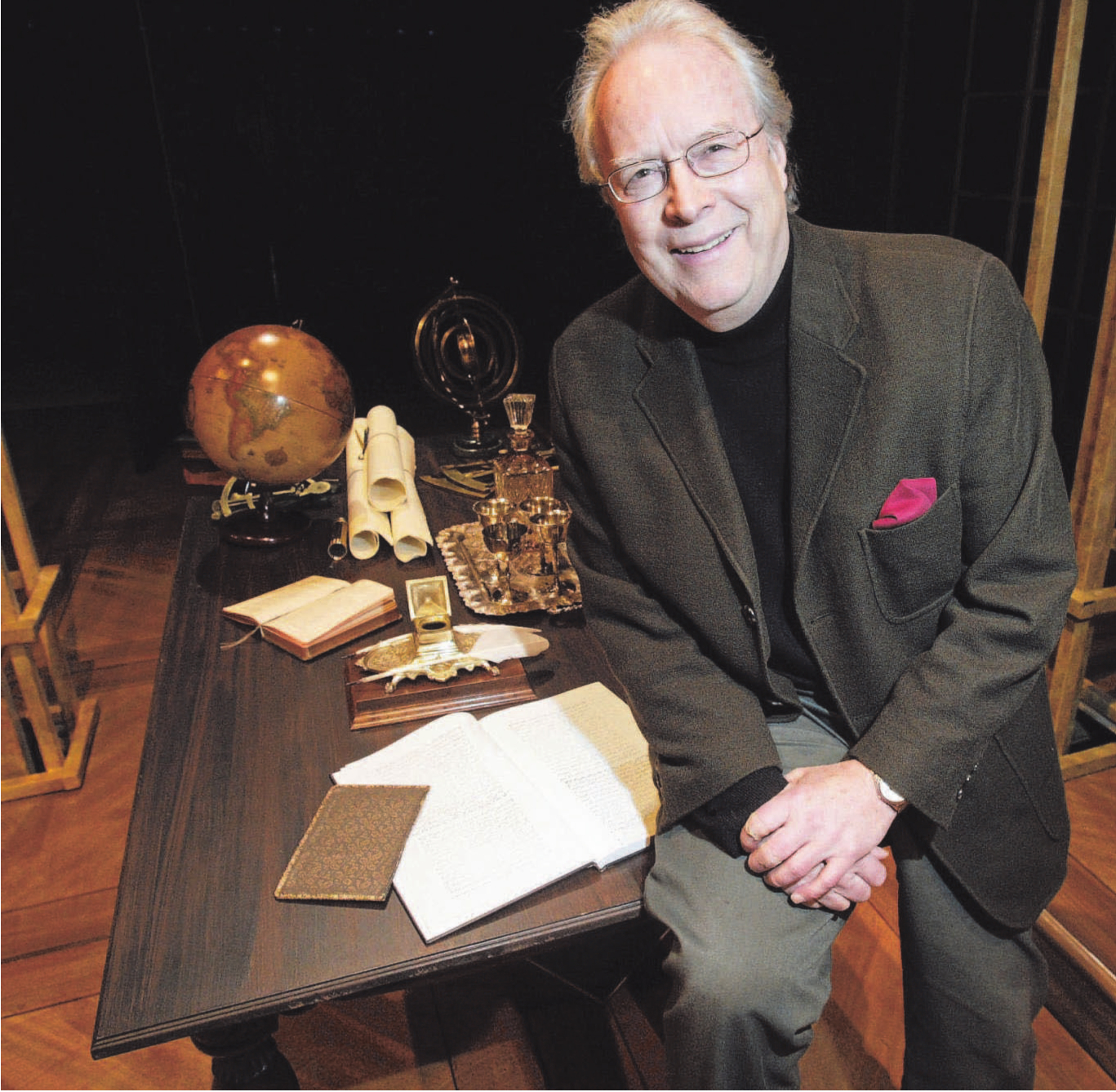
Transit of Venus composer Victor Davies, shown on the set of the opera in 2007, died in September at the age of 87.
Few careers are as uncertain as music, and at a time when the composition departments were saying you’d need to tonality, embracing the heavily dissonant styles of France and Germany, Davies was about to go against the grain. He would soon find a new home across the border in Bloomington, Ind., where for four years he studied at Indiana University Jacobs School of Music.
Home to one of the world’s most prestigious music schools, IU’s culture in the early 1960s also seemed to reflect its midwestern environment: a little resistant to some of the heady, avant-garde styles of elite coastal universities.
He believed in music being for everyone, and he didn’t see a hierarchy in the value of different musical styles. He believed in the inherent value of all music and its intention to connect with audiences, says Heather, drawing a connection between Victor’s anti-elitism and IU’s culture.
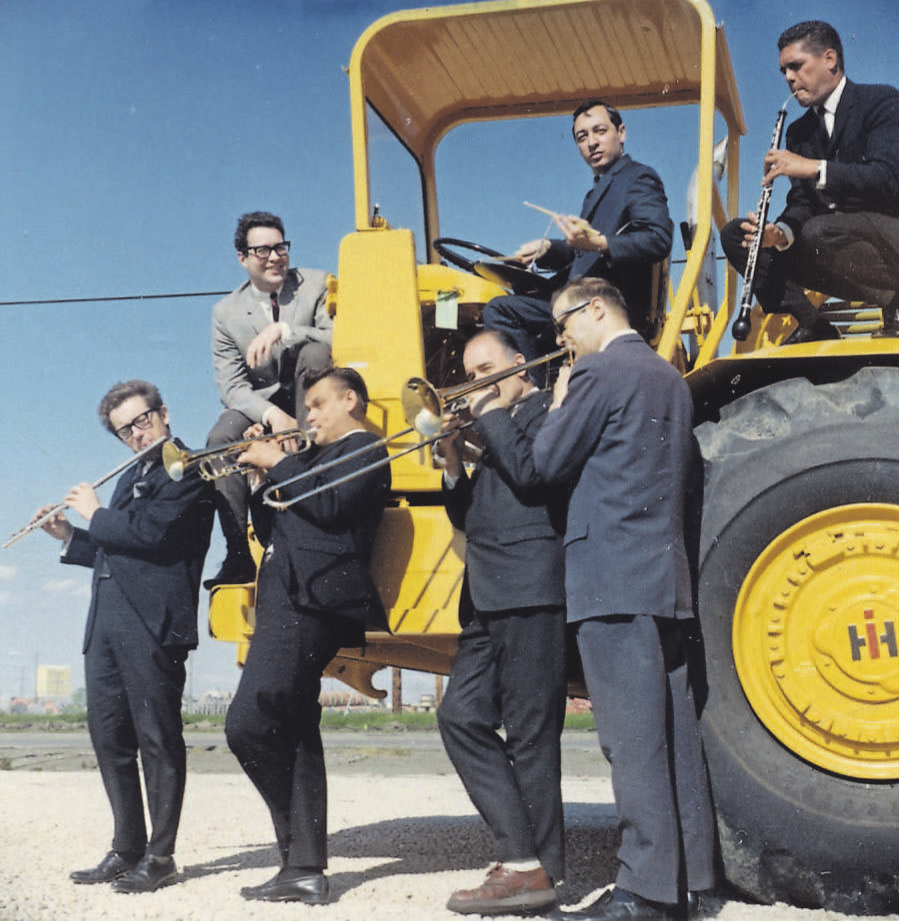
Victor Davies’ band The Cools.
But in many ways, Davies was still the maverick back in his old dean’s office.
While many of his peers pinned their hopes on careers in teaching or academia, Davies was determined to do something that seemed almost impossible for a Canadian composer at the time.
Having moved back to Winnipeg in the late 1960s, where he was now raising a young family on Montrose Street, Davies worked project to project, surviving almost exclusively on commissions. He was intent on primarily making a living as a composer.
Among Davies’ notable works of this period was The Mennonite Piano Concerto (1975). Its whimsical, cinematically romantic strains have, over decades of performances, transported audiences in Canada, China, the U.S. and England back to the Volga River and Mennonite old country — or perhaps to the early days of Steinbach.
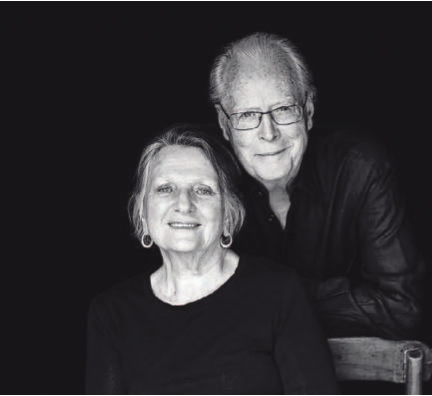
Victor Davies and his wife, Lori.
For an artist who left Winnipeg for Toronto only a few years later, but retained a lifelong connection to our prairie city, it’s also fitting that this artist of Welsh lineage would pay homage to one of Manitoba’s best-known musical communities. Davies adopted motifs from dozens of Mennonite hymns, recognizing many from tunes he sang as a boy in the United Church, though gave them something more sultry, even dance-like.
While the concerto is one of his best known works, Heather says few were closer to his heart than his rock opera Beowulf (1974). The 1970s were a potent period for highfalutin hybrids of classical music and rock, from prog-rock’s epic walls of sound to rock operas such as The Rise and Fall of Ziggy Stardust (1972) and the film Phantom of the Paradise (1974).
Described as a Canadian classic, Beowulf ultimately had an off-Broadway production thanks in no small part to Davies’ gumption: rallying musicians, assembling a choir and orchestra and finding clever ways to finance the work himself.
“Two words that really sums up Victor as a composer: entrepreneurial and…”
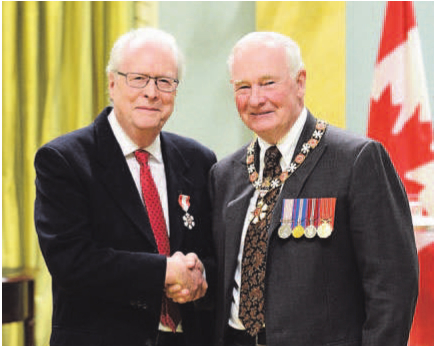
Victor Davies is inducted into the Order of Canada by then Gov. Gen. David Johnston in 2014.