
COMMERCE WITH A COMMON VOICE
Hutterite colonies embrace economic innovation, diversification
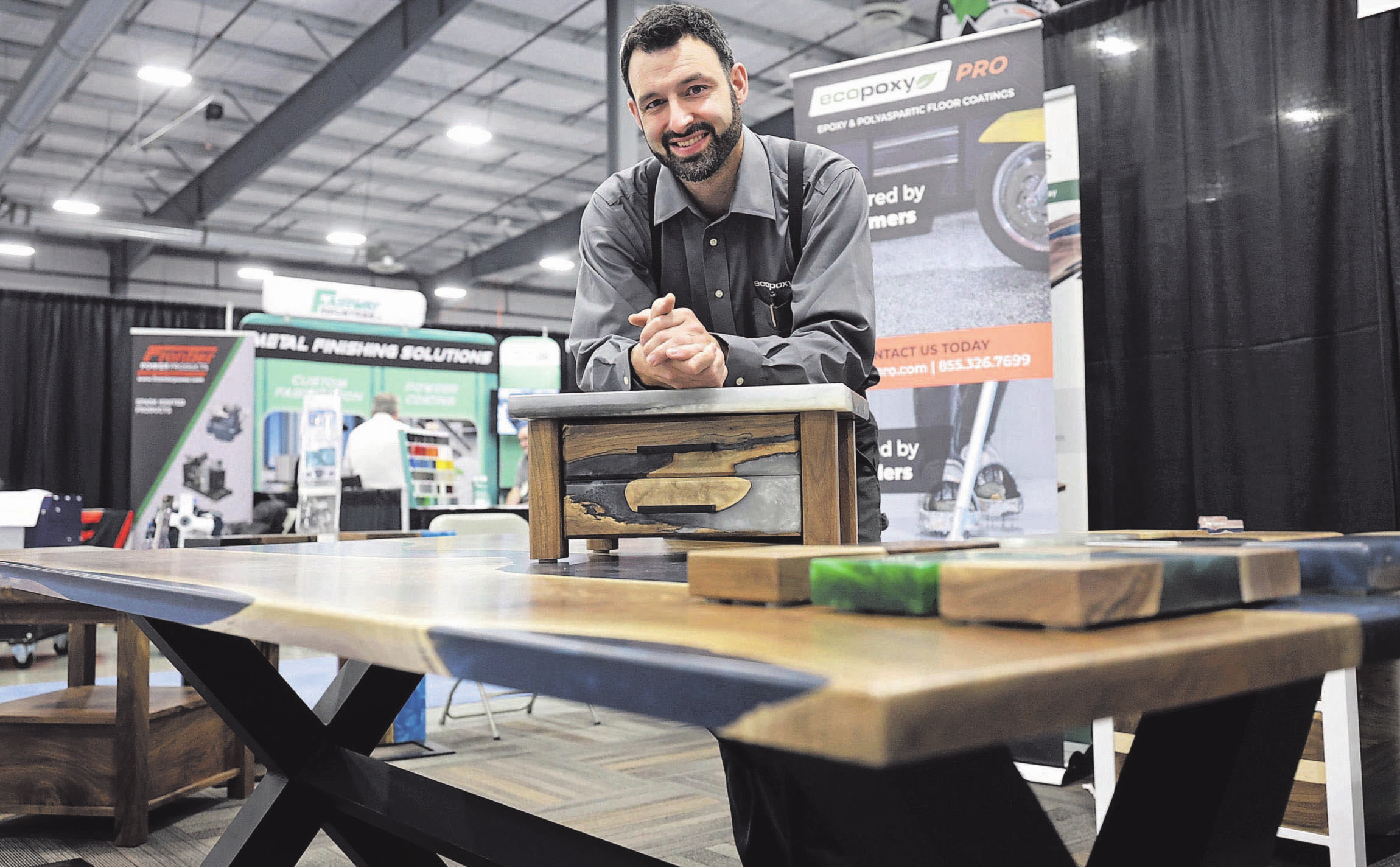
Aaron Maendel is general manager of EcoPoxy, an epoxy resin company operated by Oak Bluff Hutterite Colony. (RUTH BONNEVILLE / FREE PRESS)
TUCKED away at Oak Bluff Hutterite Colony, past rows of communal housing and farm buildings, Aaron Maendel tinkers in a laboratory.
Black-and-white sheets smeared with grey-test formulas cover a counter. A Thermotron — a refrigerator-looking machine — is powered off but standing by to simulate any desired temperature.
Maendel moves to a worktop littered with partly full mixing cups. He pulls out a small, rectangular sample — a sheet showing the drying time of his new fixation, floor coatings.
“Very simple, actually. Very simple machine. Drags a stick through the mud,” Maendel says.
The machine in question, a drying-time recorder, pierces a fine line through his test floor coatings over the course of hours.
“I have a target I want to achieve,” Maendel says, eyeing his sample and the time it took the formula to dry — 10.5 hours.
“We have to know, and we have to have it on our literature once we release the product.”
Oak Bluff Hutterite Colony — located about 65 kilometres southeast of Winnipeg — has been selling epoxy resins within Canada and internationally since buying the company, EcoPoxy, a couple decades ago.
It originally focused on woodworking customers and do-it-yourself aficionados who create resin tables and other pieces.
But lately, upon seeing sales stagnate following the COVID-19 pandemic, EcoPoxy’s leadership has looked to floor coating. It’s a much bigger market, says Maendel, the company’s general manager. “(Installers) go through epoxy resin every day.”
Maendel is used to pivoting.
The 50,000-sq.-ft. plant where EcoPoxy staff make products was, in the 1990s, a place for beekeeping. Colony members switched to floor-truss manufacturing before landing on the current business model.
Across the province, Hutterite colonies have been augmenting farming with manufacturing to sustain themselves.
Colonies formed their own manufacturing association in 2020. At a recent expo, Hutterite firms displayed their kitchen cabinets, steel doors and lick tubs, which hold nutritional supplements for cattle and other livestock.
One colony, Green Acres in southwestern Manitoba, builds firefighting trucks, pumpers and other emergency apparatuses which range in price from $300,000 to $3 million.
The trend has been growing for decades. Now, an estimated 120 Hutterite manufacturing businesses operate in Manitoba.
As colonies shift their focus, some grapple with threats to their traditional communal Anabaptist way of life, including by hiring off-colony staff. Still, it’s a movement leaders expect will continue.