
BUILDING A PLANNING POWERHOUSE
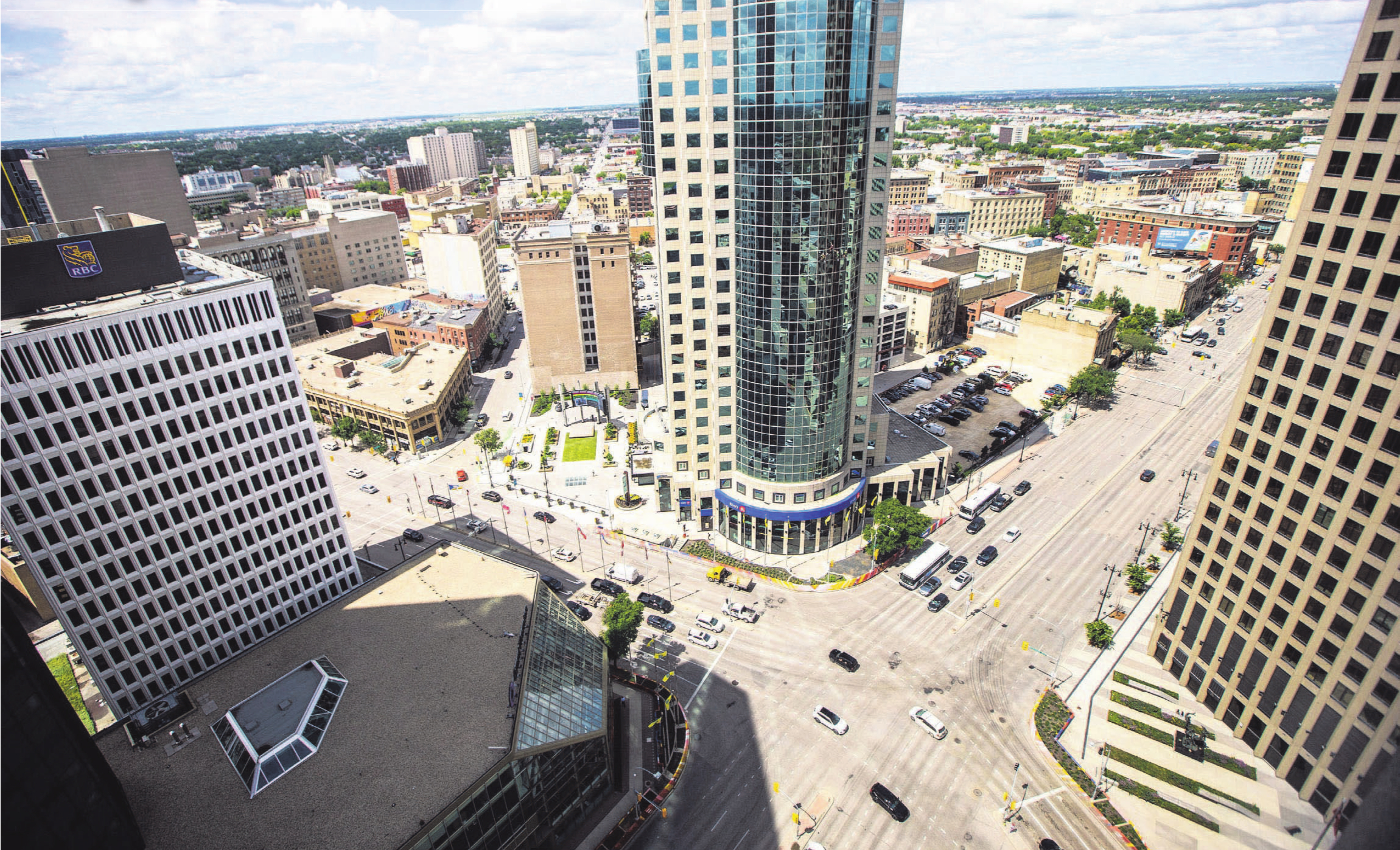
In a car-dominant city like Winnipeg, it's no surprise that vehicle traffic at Portage and Main took priority for years. MIKAELA MACKENZIE / FREE PRESS FILES
IF Winnipeg wants to become a planning powerhouse, the opportunity lies in strengthening both the capacity of planners and the institutions in which they work.
We need planning expertise close enough to political decision-making to influence it, while retaining sufficient professional independence to provide honest advice. We need planners who understand transportation, land use and infrastructure, but who can also explain how decisions shape everyday life. We need professionals who can build relationships with developers and businesses without becoming captive to their interests, engage communities without simply collecting preferences, and understand politics without becoming partisan.
Most importantly, we need planners who can move between different forms of agency. Winnipeg needs the solitarian who conducts rigorous analysis, the compromiser who brings competing interests together and the subordinate who respects democratic accountability. But it also needs the commander: the planner who can articulate a vision, shape a civic narrative and explain with professional confidence where the city should go and why.
We need institutions that allow planners to shift among these roles.
A healthy planning system is not one in which every planner holds power. It is one that gives planners meaningful opportunities to exercise different forms of influence when circumstances demand it. That means moving beyond a reactive approach to city-building. Too often, planning responds to development applications, infrastructure projects and political priorities after fundamental questions have already been settled. A stronger planning culture would ask those questions earlier: What kind of downtown do we want? How should transportation support that vision? Where should growth occur? What public spaces do we need? How do we build a city that serves today's residents while creating opportunities for generations to come?
Answering these questions requires political leadership, institutional memory and professional capacity. It requires departments and agencies to work across organizational boundaries, long-term plans to guide actual investment, and relationships among planners, elected officials, engineers, developers, businesses and communities that are established before the next controversy begins.
It also requires acknowledging that planning is not neutral. Every plan reflects choices about whose needs matter, what knowledge counts, which priorities receive investment and which futures are considered realistic. The goal cannot be to eliminate politics from planning. It must be to make the politics of city-building more transparent, informed and responsive to long-term public interests.