
Estranged sisters reconvene for tense B.C. trek
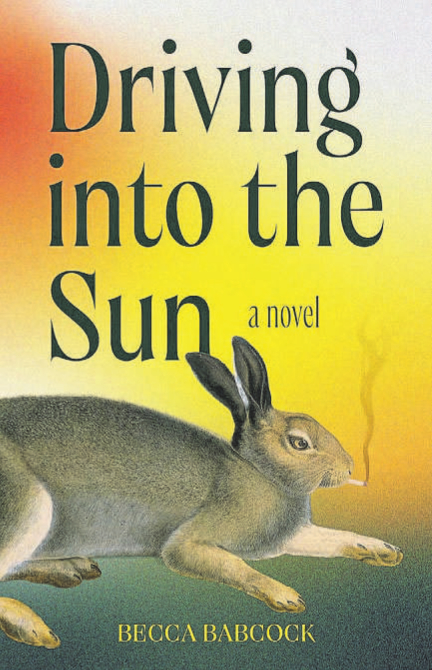
Driving into the Sun: A Novel. By Becca Babcock. NeWest Press, 300 pages, $26
DALHOUSIE University instructor and novelist Becca Babcock returns with her fourth book Driving into the Sun, a road-trip novel that explores family obligation, loss and moving on.
The novel bounces between the perspectives of estranged sisters Molly and Annie. Both grew up in Fort Saskatchewan, Alta. but soon into adulthood Molly, the younger of the two, leaves the family behind to pursue an acting career, ending up in Halifax where she has a daughter, a husband and a stepdaughter, and works in film casting.
Annie, meanwhile, has stayed in Fort Saskatchewan largely to continue looking after their mother Ferne, who suffered a traumatic brain injury when the girls were young. Though Ferne lives in a care facility, Annie is determined to be her primary caregiver, resisting any changes that might have her leave that role behind — until, that is, she meets Charlotte online.
After a few in-person visits, Annie and Charlotte decide to wed and move Annie and Ferne to Charlotte’s home in Cranbrook, B.C. To help with the move Annie calls Molly, despite not having spoken to her in years, pulling Molly’s guilt strings until she agrees to come home and help Annie and Ferne make the more than 700 kilometre road trip to Cranbrook.
Fairly soon into the trip, while the sisters are arguing, Ferne wanders away, forcing Molly and Annie to work together to search for her.
Though Annie reaches out to Molly in the first few pages, and the road trip is very much the inciting incident of the narrative, the three don’t actually hit the road until the novel’s halfway mark. Besides shifting between Molly’s and Annie’s perspectives, and a couple of brief interludes from Ferne’s perspective, the narrative is filled with flashbacks showing the sisters’ very separate lives during the years leading up to the move to B.C.
While these might have served to demonstrate a core relationship that could be repaired, Annie and Molly don’t really have one; the flashbacks don’t go back far enough to see a point where they might have gotten along, and why they might have agreed to come through for each other. Their lives are so separate that it raises the question of why Annie doesn’t simply ask her fiancée Charlotte to make the trek with her instead of forcing this reunion neither sister wants.
There are some flashbacks involving their mother, but only after her brain injury, and Ferne is relegated to little more than a burden to put up with. Her bouts of confusion and anger are difficult for the family, but the novel doesn’t meaningfully show what she was like before the accident, so there’s little sense of what has been lost. The scenes from Ferne’s perspective do humanize her a little, but also undercut how severe her injuries have been described up to this point.
Molly and Annie remember the ways Ferne’s behaviour has essentially cut off the entire family from being able to live normal lives, yet in the present-day scenes, especially towards the end of the novel, these more severe symptoms fade away and become of little impact to those around her.
There are solid component pieces in this novel; both sisters have well thought-out backstories and career paths, and the basic conflict of how to care for a vulnerable family member and how to share that responsibility without breeding resentment is great fuel for a novel. But the pieces don’t quite come together as a whole and wind up feeling separate from each other.
Keith Cadieux is a Winnipeg writer and editor. His latest story collection Donner Parties and Other Anti-Social Gatherings is out now, and was named a best books of 2024 by the Free Press. He also co-edited the horror anthology What Draws Us Near.