
Klein promises to freeze property taxes, charge fee to hire more police officers
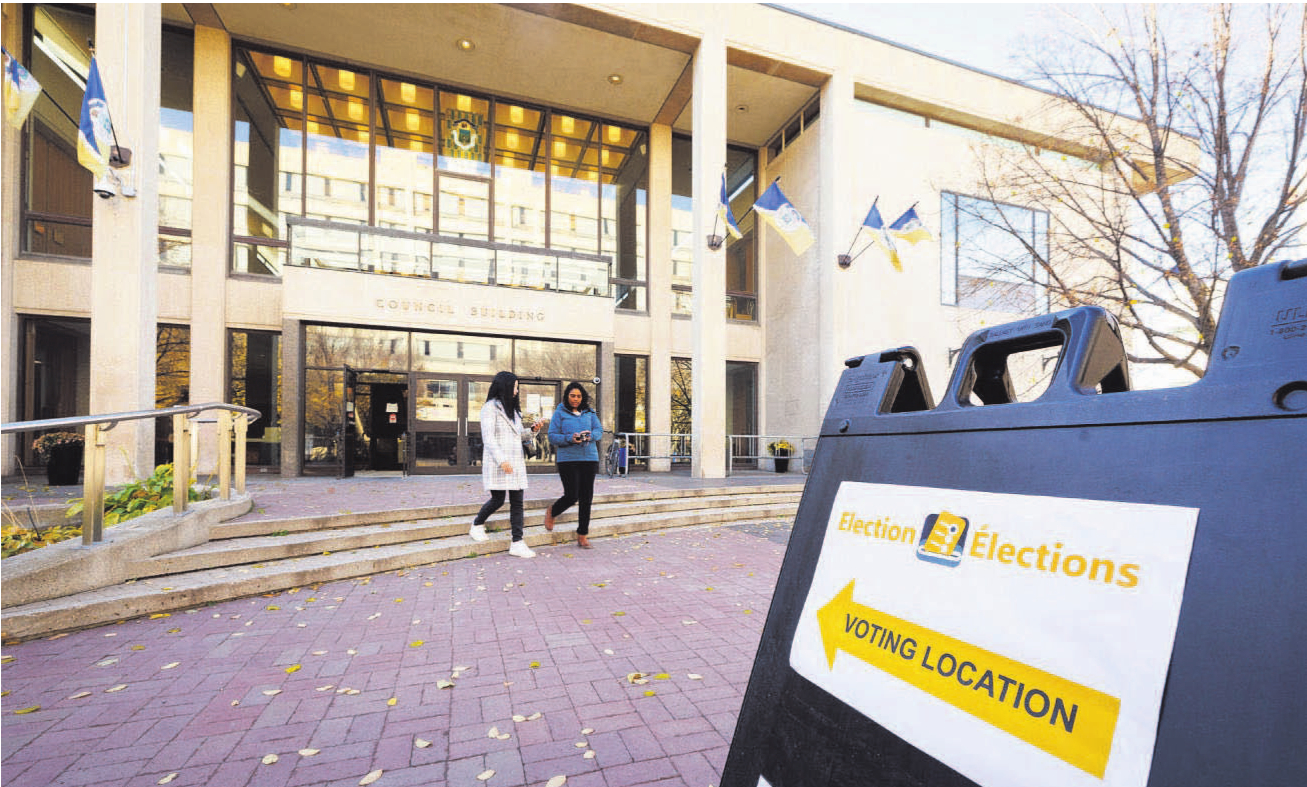
A record-high number of Winnipeggers showed up at advance polls this year. MIKE DEAL / FREE PRESS
KEVIN Klein would freeze property taxes next year but charge homeowners a new, separate $3.99 monthly police fee, if he's elected mayor of Winnipeg next week.
Klein released his costed platform Friday, which calls for the new charge. He said it would last at least four years but is not meant to be permanent.
"I don't see this as saddling this with somebody for the next decade or 20 years. I see this as something we have to do today, to get more police officers on to the streets, that we are, right now, desperately in need of," he said.
The revenue would allow the city to hire 100 more police officers, with 50 new uniformed cops added in each of the next two budgets, said Klein.
"Every dollar collected will be dedicated to the additional officers," his platform document notes.
In years two, three and four of his term, Klein said the annual property tax hike would be capped at 2.99 per cent.
"This is a responsible approach that will move Winnipeg forward," he said.
He called his plan more reasonable for taxpayers than the 5.95 per cent property tax hike city council imposed in 2025, alongside significant increases to garbage collection fees and sewer rates.
"Households keep paying more and getting less. Sidewalks continue to be broken, infrastructure crumbling, arenas closed," said Klein.
He would ask the provincial government to approve his "dedicated police fee," even though he believes the city has the power to add it. That flat fee for all homeowners would cost "less than a Netflix subscription," he noted.
Klein also promised to complete a "line-by-line" review of every city department's budget to "challenge spending, identify efficiencies and redirect resources toward frontline services."
While he hopes to save money, Klein promised not to eliminate front-line jobs over the next four years. He did not extend that commitment to all city workers.
"For management, I can't promise that," he said.
His plan would also redirect 50 per cent of funding for Winnipeg's bike lane program to combat homelessness, improve arenas and update community centres. That would transfer about $6 million, based on the 2026 budget, he said.
Winnipeg Votes
"We need to take 50 per cent of the money we have for bike paths because that's not a critical issue in our city," said Klein.
Reducing homelessness, by contrast, is an urgent priority for many Winnipeggers, he said.
Klein's plan would also direct frontage levy revenues to improve roads, sidewalks, curbs, lanes and boulevards, not cover general city operations.
He also plans to freeze water and sewer rates, as well as waste collection fees for two years. He expects the federal government will soon grant a $500-million request to help fund the third and final phase of the overall $3.1-billion North End sewage treatment plant upgrade, which he said would allow the city to avoid further rate increases.
The plan calls for audits of the North End plant upgrade and federal Housing Accelerator Fund.
Klein is the only mayoral candidate to release a fully costed platform so far.
Scott Gillingham, who is seeking re-election, criticized Klein's financial plan as "sloppy" and "inadequate," alleging it would force him to cut spending on important construction projects and services.
"It looks, really, like it's been written on the back of a napkin. In year one, he's proposing to freeze property taxes, which means he's cutting roads' budgets, which means more potholes, less roads getting fixed," said Gillingham.
He said Klein would need provincial permission to add his public safety levy and challenged his competitor's plan to move bike lane funding to homelessness initiatives.
"A good portion of the bike lane funding is funded through the frontage levy, which has to go to roads ... By law, (the) frontage levy can only be used for roads, or road-related work, including bike lanes," he said.
Gillingham promised to release his own costed election platform on Monday. He said that will include a 3.5 per cent property tax increase in 2027, that will raise revenue to "protect" city services and the roads budget.
Elsewhere on the campaign trail, mayoral candidate Umar Hayat shared a pledge to "revamp" Winnipeg Transit, which includes offering free rides for all passengers for six months.
"Universal access could help residents financially, encourage greater transit use, and potentially reduce congestion and emissions," said Hayat.
He expects to seek funding from the provincial and federal governments to help pay for that change, as well as more provincial funding to support Transit operations.