
Something Wicked This Way Comes
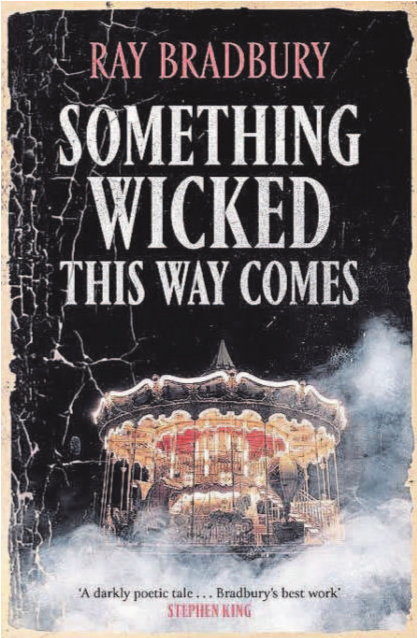
Something Wicked This Way Comes by Ray Bradbury
FEW authors write so frequently, so passionately about October as Ray Bradbury did. From his earliest work throughout the rest of his career, Bradbury returned again and again to the October Country as the settings of short stories, poems and novels.
But in his 1962 novel Something Wicked This Way Comes, October is as much a character as protagonists Will Halloway or Jim Nightshade, or the creepy carnival cortege of Cooger & Dark’s Pandemonium Shadow Show that rides in, under cover of darkness, bringing Halloween to Green Town, Ill., a week early “one strange wild long dark year.”
The carnival is full of strange characters indeed, from the Mr. Dark, a.k.a. the Illustrated Man, on down through sideshow mainstays the Skeleton, the Dust Witch, Mr. Electrico and many more who revel in the shadows and the liminal space October occupies on the calendar.
“For these beings,” Bradbury writes, “fall is the ever normal season, the only weather, there be no choice beyond. Where do they come from? Dust. Where do they go? The grave. Does blood stir their veins? No: the night wind. What ticks in their heads? The worm. What speaks from their mouth? The toad. What sees from their eye? The snake. What hears with their ear? The abyss between the stars… Such are the autumn people. Beware them.”
Yet at its dark, poetic heart, Something Wicked is a coming-of-age story, a tale of friendship and family, nostalgia and the growing pains inherent in moving forward through life. Stephen King himself considers the novel to be Bradbury’s best work, and it is a clear inspiration for King’s 1991 novel Needful Things, itself a fine example of an October Country read.
— Sheldon Birnie