
POVERTY
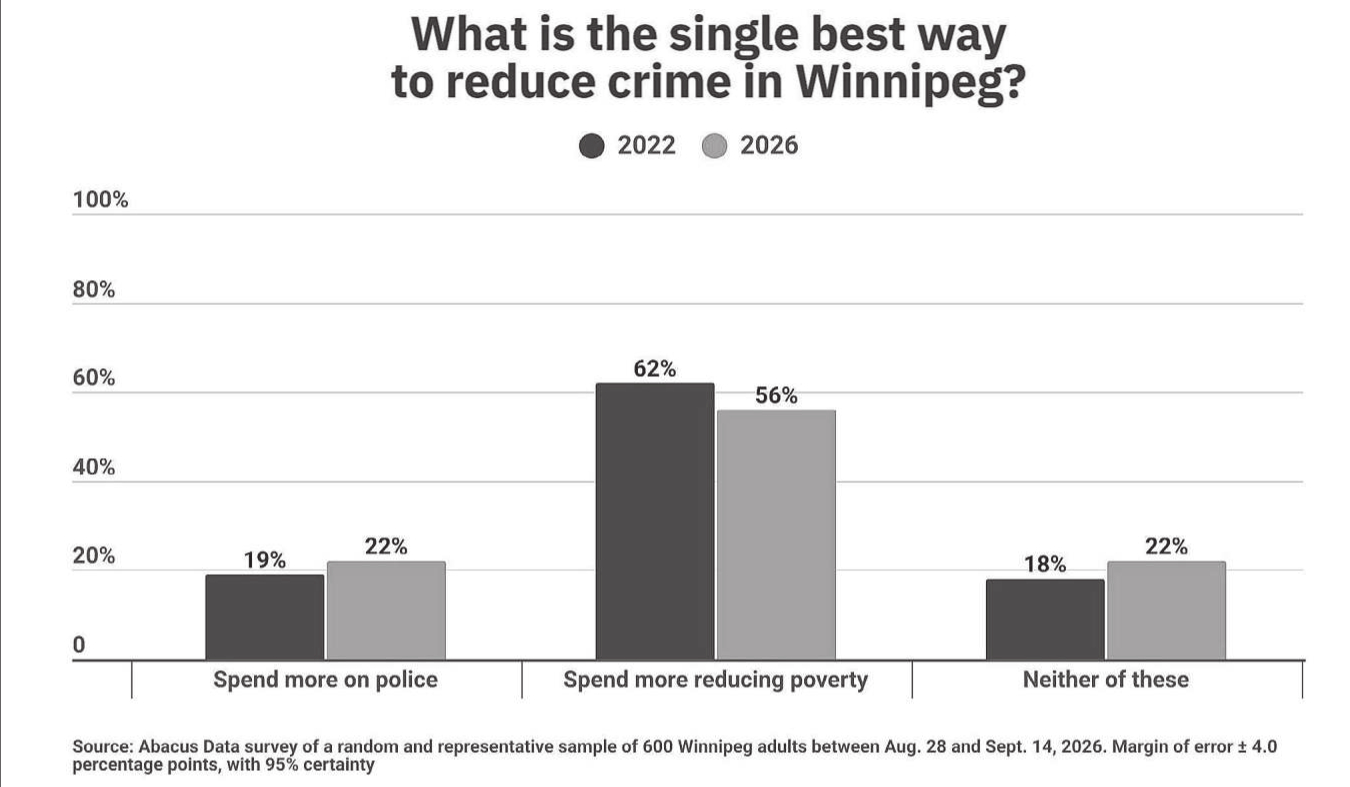
What is the single best way to reduce crime in Winnipeg? Source: Abacus Data survey of a random and representative sample of 600 Winnipeg adults between Aug. 28 and Sept. 14, 2026. Margin of error ± 4.0 percentage points, with 95% confidence.
The proposal would reduce the WPS share of the city’s overall budget from 28 to 23 per cent, still well above the 15 per cent average in comparable Canadian municipalities, according to the centre.
Molly McCracken, director of the centre’s Manitoba office, said Winnipeg has lost approximately 150 community service positions over the past 25 years, alongside reduced hours at libraries and community centres.
“We’re just trying to remind people that we’ve lost a lot at the city and community services isn’t that big of a line item,” she said. “But it can have a huge impact, but not if we completely underfund it.”
The alternative budget also calls for higher property taxes, arguing decades of efforts to keep taxes low have come at the expense of municipal services and infrastructure. All three leading mayoral candidates have said they would raise property taxes, but haven’t given many details on where the additional dollars would be spent.
Meanwhile, one Winnipeg organization has developed its own alternative approach to community safety.
Mary Burton, executive director of Zoongizi Ode Inc., said the Indigenous youth organization began developing its community safety program in 2021.
“When we started this, we realized that police do not stop crime. They respond to it,” Burton said.
The organization developed a training program that goes beyond the standard 40 hours required for a security guard licence, providing another 130 hours of instruction in areas such as de-escalation and non-violent crisis intervention.
“We started out with three community safety hosts,” Burton said. “Now, we’re up to about 50, and we’re in libraries, ACCESS Centres and now the Winnipeg School Division. All of our hosts have lived experience with homelessness, with poverty, with justice or the child welfare system. Because who better to help our relatives struggling in the street than someone who has been there?”
Abacus Data surveyed 600 Winnipeg adults between Aug. 28 and Sept. 14. Results were weighted to reflect the city’s population and have a reported margin of error of plus or minus four percentage points, 19 times out of 20.