
The moment of maximum danger
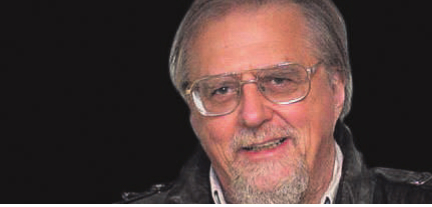
Gwynne Dyer
A long time ago I was interviewing a professor at the University of Michigan (whose name I cannot recall) on various topics of no great interest. I was about to give up when I accidentally asked the right question.
“Have any major human behaviours really changed in the past few centuries?” I asked, and he said “No, but the sociopaths are multiplying.”
I was dealing with a full-time sociopath in my work at that time, so I immediately went back into interview mode. (“Sociopath” and “psychopath” both describe essentially the same behaviours, although they may be more extreme in the latter case.) And the professor proceeded to explain it in evolutionary terms.
The typical sociopath is male, above average intelligence, highly manipulative and utterly without empathy (but he is able to mimic it). His lies often are very persuasive, because he totally believes his own lies as soon as he says them (while retaining the ability to modify them if necessary). He is often charismatic and usually has many children by several women.
But we are talking about evolution here. Why would the tiny groups that human beings lived in for all but the last few thousand years of our long history on this planet benefit from having a sociopath in their bands?
Well, they wouldn’t benefit normally, but the resident sociopath wouldn’t be able to do much damage either, because in a small band everybody would know that you can’t trust this guy. And he could be useful in a crisis.
So far, so good, and the professor reckoned that the traditional proportion of sociopaths was around one per cent of the population. But, he said, the rate has already risen to about three per cent of men — and he had a plausible theory for why that is happening.
Sociopaths were not very harmful when everybody around them had known them since childhood. They are much harder to spot when they live in modern societies with millions of members. They leave a trail of harm behind them, but they can keep on meeting new people who do not recognize them as sociopaths and they reproduce very fast.
You probably already know I am talking about Donald Trump, who is a walking compendium of sociopathic traits. The two famous acts about that the moment are his impulsiveness (“Let’s attack Iran!”) and his inability to sincerely believe his own lies as soon as they are out of his mouth.
We saw this from November 2020 to January 2021, when his shock at losing the presidential election almost instantly turned into unshakable conviction that he had been cheated out of victory. We are almost certainly going to see it again when they count the votes in the midterm elections next month and the outcome is a Democratic victory.
Trump, of course, will claim foul. That’s just what he does. But most political analysts will assume that Trump knows he is lying — and on that, at least on big issues like his political fate, they are almost certainly wrong. His self-serving lies really do become his genuine beliefs. The outrage is real. “Justice must be served!”
Many people fear the United States is heading for a constitutional rupture at some point in the next couple of years or at least a major assault on the constitutional order. A relatively few think it will come so soon, over an election that does not directly challenge the role of Trump. They may be wrong.
Evidence simply had no influence on Trump’s conviction that the Democrats stole the 2020 election and it would have as little effect on his beliefs in the (quite likely) event a Democratic victory this November.
The existential crisis of American democracy could arrive as soon as next month. This does not necessarily mean disaster. In many ways the Trump administration is “The Gang That Couldn’t Shoot Straight” and their ideology is not coherent enough for a durable authoritarian regime. One could almost wish that they tried their push now, rather than two years from now when they have had more time to organize, but that would be tempting fate.
It could still happen. The moment of maximum danger may be closer than we think.
Gwynne Dyer’s new book is Intervention Earth: Life-Saving Ideas from the World’s Climate Engineers.