
First Nations prepare for key meeting
Indigenous leaders gather for ceremonies ahead of historic summit with prime minister and some premiers
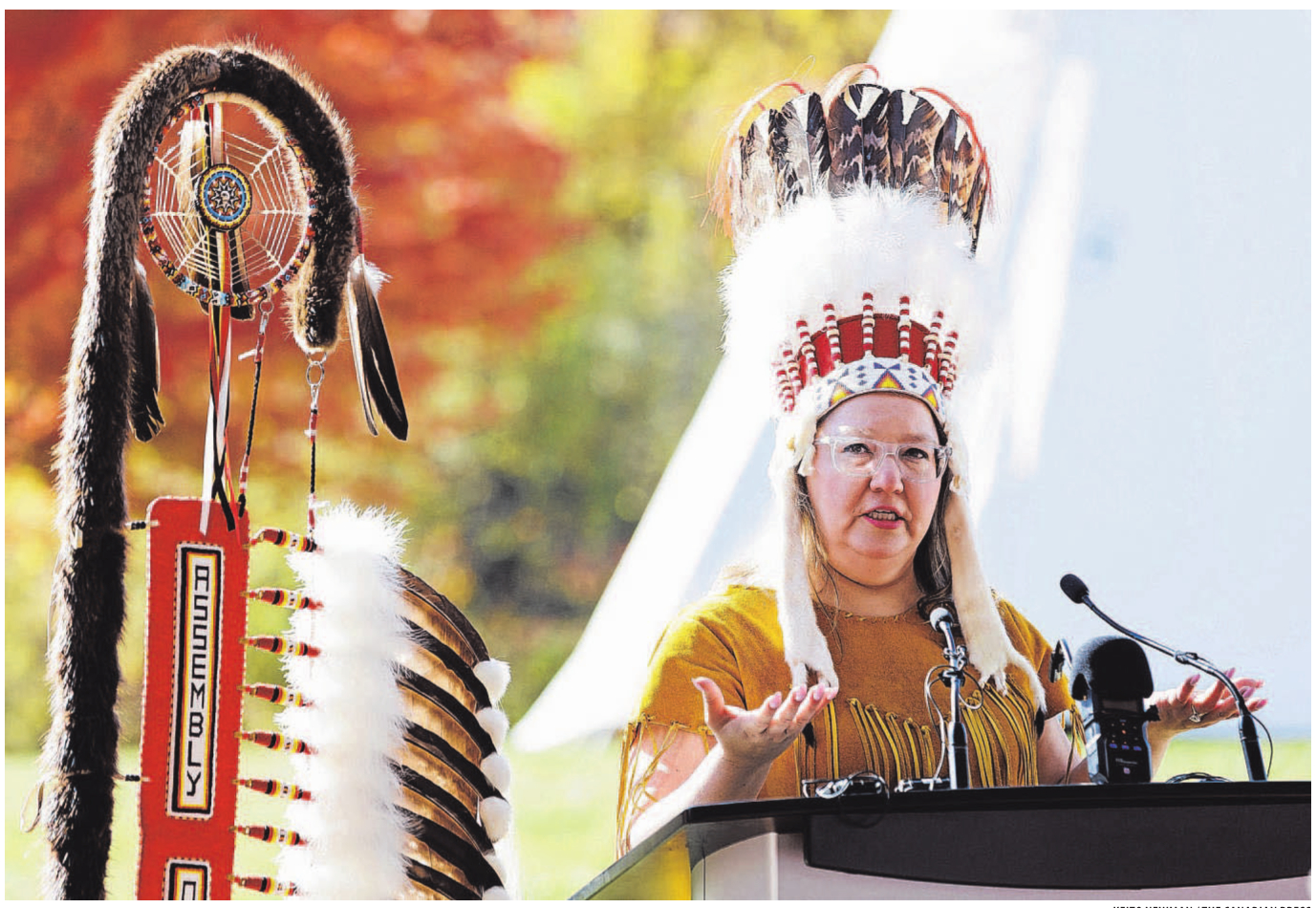
National Chief Cindy Woodhouse Nepinak says First Nations want to be partners in making a strong economy that works for everyone. KEITO NEWMAN / THE CANADIAN PRESS
OTTAWA — First Nations leaders gathered in Ottawa on Sunday for ceremonies ahead of a historic meeting today with some premiers and Prime Minister Mark Carney, while grassroots activists planned their strategy to protest the meeting while heavily invoking the 2012 Idle No More movement.
National Chief Cindy Woodhouse Nepinak told reporters Sunday afternoon that First Nations want to be partners with the provinces in making a strong economy that works for everyone.
“We see geopolitical unrest around the world for many people including Canada. And we want to work toward prosperity for First Nations, and make sure that this meeting isn’t a one-and-done,” she said.
As part of the ceremonies, premiers were given a handful of tobacco they were encouraged to pray upon. They then followed Woodhouse Nepinak to a tree on the grounds of the Diefenbaker Building where they placed the tobacco at the trunk.
Today’s meeting will be the first such gathering since the Kelowna Accord talks of 2005, which brought premiers and then-prime minister Paul Martin together with Indigenous leaders to discuss ways to close the socioeconomic gaps in their communities.
First Nations will be represented in the closed-door meeting today largely by regional chiefs from the Assembly of First Nations.
The Privy Council Office has not said which premiers will be attending the meeting. Manitoba Premier Wab Kinew, who is Ojibwe, attended the day of ceremony along with New Brunswick Premier Susan Holt, Prince Edward Island Premier Rob Lantz, Newfoundland and Labrador Premier Tony Wakeham and Northwest Territories Premier R.J. Simpson.
Quebec Premier Paul St-Pierre Plamondon and Alberta Premier Danielle Smith have both said they will be absent from today’s meeting.
St-Pierre Plamondon explained that he wants to prioritize a different approach with Indigenous peoples and that he has several meetings scheduled in the near future, including one with the chief of the Assembly of First Nations of Quebec and Labrador.
Smith said she will not be attending because the meeting overlaps with the resumption of question period in her province as well as the aftermath of a historic referendum on separation.
Woodhouse Nepinak said it’s important premiers attend as First Nations have a role in national unity. “There is no shortage of issues, and the quicker we all get back to the table, the better this country will be,” she said.
The ceremonies were held in Ottawa with knowledge keepers, elders, First Nations leaders and community members.
Crown-Indigenous Relations Minister Rebecca Alty was at Sunday’s ceremony, alongside Indigenous Services Minister Mandy Gull-Masty and Northern Affairs Minister Rebecca Chartrand.
Prime Minister Mark Carney did not attend the ceremonies, which NDP MP Leah Gazan said is a sign of disrespect.
“You cannot preach partnership abroad while neglecting the relationships, rights and obligations that must be honoured at home,” Gazan wrote on social media.
When asked what he made of some of his colleagues not attending the ceremonial gathering, Kinew said ceremony is an integral part of the conversation.
“We have to acknowledge that there’s something greater than ourselves, no matter how you conceive of that,” Kinew said.
“That could be a spiritual thing, that could just be a reminder that none of us are as important as the province or country or territory or community that we represent. Ceremony is an effective way to do that.”
The meeting comes as Carney works to speed up major project approvals and development — efforts some First Nations chiefs say threaten their rights.
Tensions between Ottawa and First Nations spiked soon after Carney was elected in 2025 when his government passed legislation to create a new office tasked with streamlining major project developments and approving projects within one year.
First Nations leaders warned the compressed timelines would interfere with their rights and lead to court challenges. Provincial governments have enacted similar legislation.
But tensions are boiling over for a number of other reasons as well, including the lands claim process in British Columbia, the newly announced Pacific Link pipeline project in Alberta and development of the mineral-rich Ring of Fire in Ontario.
The Assembly of First Nations has been preparing for the meeting for months by holding town halls with chiefs to discuss actions they want to see governments take. Gina Wilson, who recently served as deputy minister at Indigenous Services Canada, helped to advise chiefs as they lined up their priorities for the meeting.
The AFN released a handful of position papers last week on economic development, policing and public safety, employment and health.
Mohawk policy analyst Russ Diabo said he’s worried the meeting will focus entirely on economics and avoid tougher conversations about First Nations rights. He has helped to organize a counter-meeting of grassroots leaders and advocates and a protest of the meeting itself, saying he does not trust the AFN to act in the best interest of communities.
— The Canadian Press