
Caretaker of canines
Clinic helpers keep dogs calm during blood donations
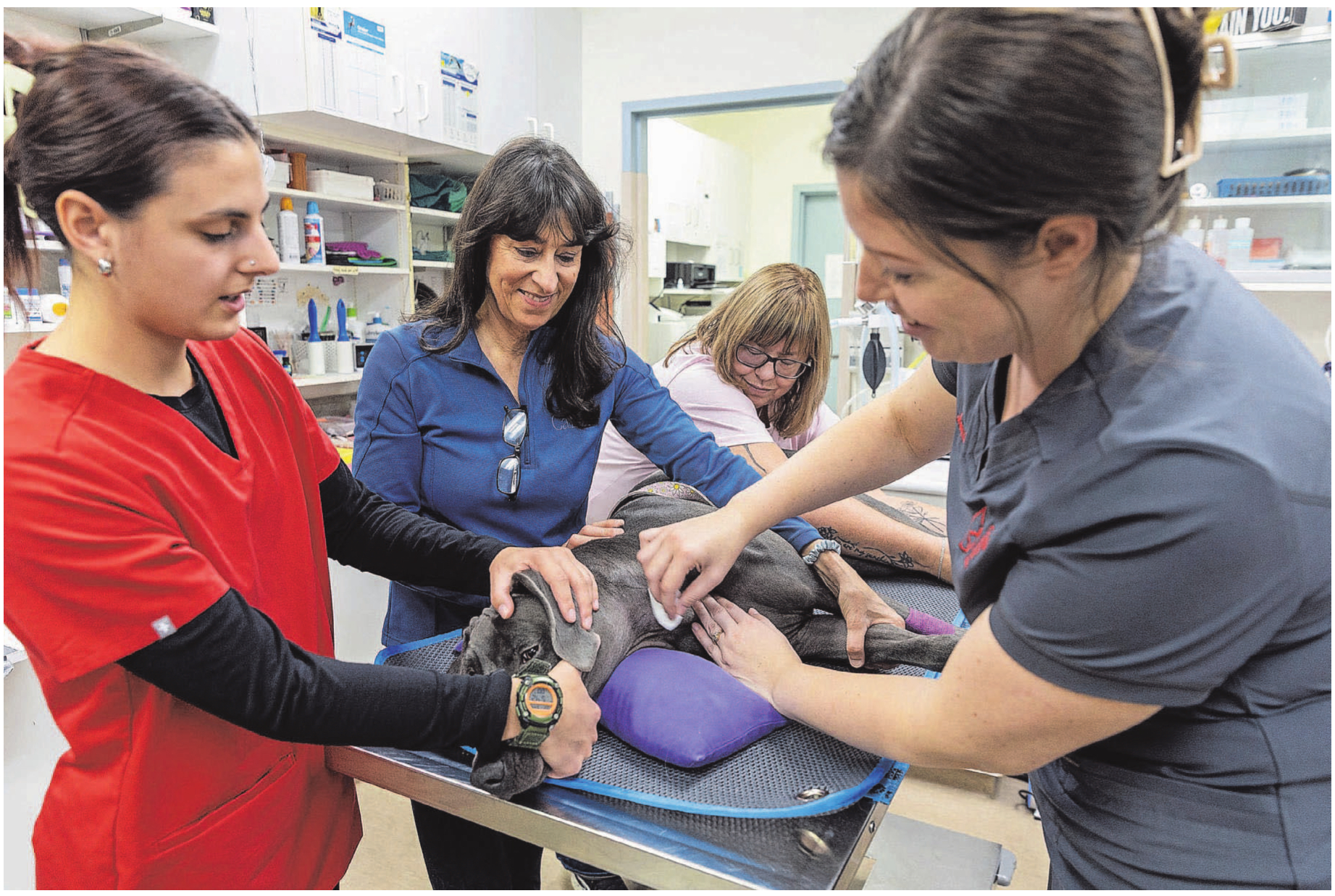
Canadian Animal Blood Bank volunteer Sophie Ethier (second from far left) holds Freya while the Weimaraner dog donates blood at the Alpine Animal Hospital in Winnipeg. BROOK JONES / FREE PRESS
ANIMAL lover Sophie Ethier was looking for a volunteer role when she came across an appeal for donor clinic volunteers at the Canadian Animal Blood Bank and was immediately drawn to the cause.
She’s been volunteering regularly since the summer, taking on three-hour shifts at one of the many collection clinics around the city.
A typical shift starts with a canine meet-and-greet before Ether collects pre-donation health information and weighs the dog. Then, if the donor is a new one, a regional veterinary technologist will collect blood samples to identify blood type.
Dogs, like humans, have different blood types, Ethier points out. Canine blood falls into either DEA (Dog Erythrocyte Antigen) 1 negative or positive. Only 40 per cent of dogs have type DEA 1 negative and can only receive negative blood.
After the blood type has been identified, Ethier helps the vet tech while blood is collected from a vein in the dog’s neck. The dog’s owner remains in the donation room to provide comfort and a steady stream of treats. The three work together to make sure the canine remains still for the five to seven minutes needed for the procedure.
Ethier leans over the body and holds one of its hind legs and one of its front legs as a precautionary measure so, should the dog move, she is able to stabilize it gently. There is a minimum weight criteria for dogs to give blood — they have to be at least 55 pounds — and on average, donor dogs weigh around 80 pounds, Ethier points out.
“I am very experienced in the dog world,” she says. “I like dogs and I feel very comfortable with large dogs. The technician and I lift the dog onto the table and help it to lie on its side. While the technician collects the blood, the owner gently holds the dog’s head and keeps giving them praise and petting them.”
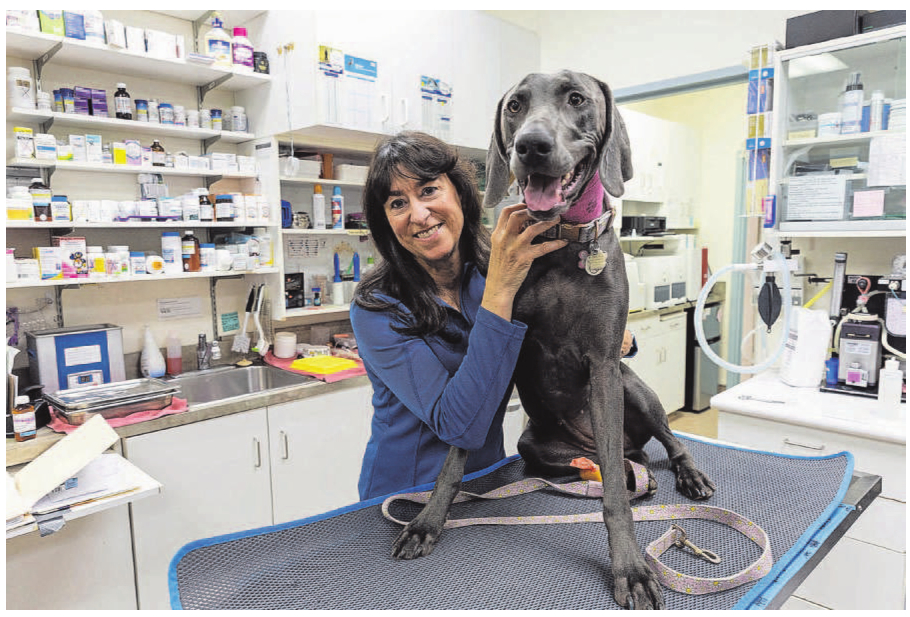
Volunteer Sophie Ethier with Freya after the Weimaraner dog donated blood. BROOK JONES/FREE PRESS
“From my position, I can prevent the dog from sitting up ... if they move, the needle would most likely come out. Donors who have experience are very valuable because once they know their routine, they’re very relaxed and it’s easy. It’s all about making this experience positive for the dog, from the very beginning of their visit.”
A large part of Ethier’s role is to make sure new donors form positive associations with the visit to the animal hospital. Plenty of treats, praise, pats and belly rubs are employed to reinforce feelings of comfort and connection.
The charity provides onsite training to all volunteers to ensure the donation experience is safe and enjoyable for people and dogs.
Large energetic dogs with a “reasonable” level of obedience and confidence are often great donors as they are able to lie still for the donation. Dogs who are nervous or anxious, wary of new people or fearful during vet appointments may not be able to donate.
Volunteers do not need to have a dog; they just need to be comfortable being around large dogs and, “have patience with the donor,” Ethier says, pointing out that if a canine donor is fearful, they will never be able to donate.
“We don’t want to force a dog. We will try to coax the dog into the room with treats, let them take their time to get used to their surroundings, but if they are still very nervous than we don’t collect blood. But even if we were not able to go any further, that would count as a positive first visit experience because the dog came to the vet hospital and came into the room,” she explains.
Ethier used to own two large dogs. She finds the work rewarding and enjoys contributing in this way.
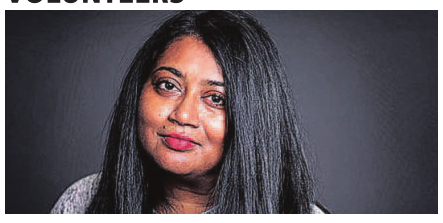
AV Kitching
“I no longer have dogs. I like to work with dogs, so this is a nice way to stay involved in that world. Most of the dogs are quite good, very special dogs,” she says. “There was a golden retriever, who is also a seeing eye dog. She is a female dog, and she is contributing so much, for humans and for dogs. She is very sweet, and her owner is super kind and nice.”
Ethier points out that as well as looking for volunteers to help in the clinics, the charity also needs canine donors. Donated blood is used to support dogs during surgery and times of trauma as well as those with health conditions such as parvovirus, anemia and rat poison toxicity, among other things.
“Owners have to believe in the cause, and they must want to contribute to it. It’s a good cause. Demand is very high and the supply is quite low so every donation is important and can help to save a dog’s life,” she says.
For more information on how to become a human volunteer or have your canine donate at the Canadian Animal Blood Bank, visit canadiananimalbloodbank.ca
If you know a special volunteer, please contact av.kitching@winnipegfreepress.com