
Most tricks and treats not safe for pets on Halloween
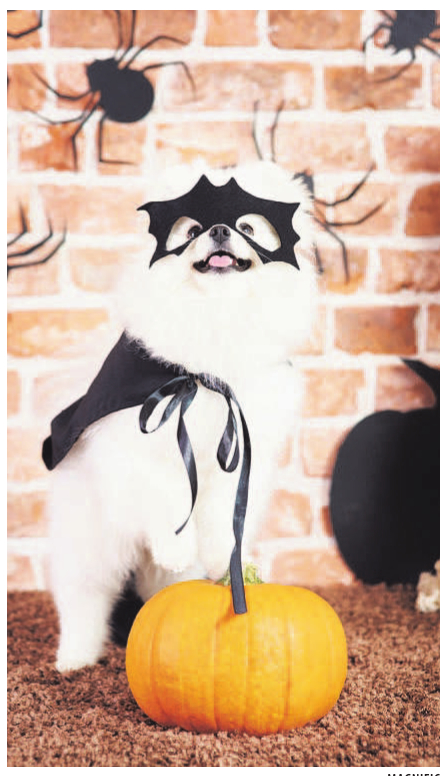
Halloween has its hazards for dogs. MAGNIFIC
HALLOWEEN is one of the most popular holidays for many North Americans. While it’s great fun for children and adults, we should also be aware that it can be a dangerous time for pets.
Every Halloween, veterinary clinics and emergency centres care for dogs (and cats) that have gotten into trouble in any number of ways. Pet owners should be aware of the dangers and take steps to keep pets safe.
Many of the foods and treats we enjoy on Halloween are toxic to dogs, and some can be deadly. Unlike cats, who tend to be picky eaters, many dogs will eat anything — including the wrapper and packing in which the treat is stored.
Here are some treats and Halloween decorations to look out for this week.
● Chocolate. Chocolate consumption in dogs is probably the most common problem veterinarians treat. Chocolate contains theobromine, which can be harmful and sometimes fatal to your dog.
The general rule on chocolate is that the darker the chocolate, the more danger it poses to a dog. Baking chocolate and cocoa powder are especially potent and toxic to pets, which is why baked goods such as chocolate cookies, cake and brownies are a serious problem when ingested by dogs.
Also, the proportion of chocolate ingested to the weight of the dog matters, so smaller dogs have a higher concern for showing signs of toxicity, though dogs of all sizes can become affected if enough of the ingredient is consumed.
If your pet consumes chocolate, contact your veterinarian, a veterinary emergency centre or a pet poison helpline immediately. Prompt care can minimize the danger to your dog.
If your dog also ate candy wrappers or bags, it may present the additional problem of intestinal blockage, so be sure to let your veterinarian know exactly what was consumed.
● Sugar-free products. Many sugar-free products contain xylitol — also called birch bark. Xylitol is a sugar substitute that is toxic to pets. This ingredient is often used in sugar-free gum, candy and baked goods. It is also found in some toothpaste, peanut butter and other products. It is toxic to both dogs and cats.
● Raisins. Small boxes of raisins may be a healthy treat for children, but raisins and grapes are dangerous to dogs and can cause renal failure. Always keep raisins (and grapes) out of your dog’s reach.
If your dog consumes raisins, call your veterinarian or veterinary emergency centre immediately. Prompt action can be helpful in reducing the risk to your pet.
● Candy wrappers. Some dogs are so interested in the candy that they swallow the wrapper as well. Wrappers can become lodged in your pet’s throat or intestinal tract, requiring surgery to remove.
● Costumes. Your pet may look adorable in a Halloween costume but make sure anything you put on them fits properly and does not have any dangerous decorations such as beads, snaps, buttons, ribbons or elastic. It should close with Velcro and be free of dangling parts or pieces that can be chewed off.
Additionally, costumes can lead to overheating. Never leave your dog unattended while she is wearing clothing or other decorative items.
● Crowds. It is important to remember that even the calmest dogs can get scared too. It’s best to keep dogs (and cats) inside during trick-or-treating hours to prevent them from getting spooked.
If you do venture out with your dog on Halloween, always keep them on a leash under the control of a responsible adult. Be sure to keep pets away from the door when trick-or-treaters come to visit.
It’s a good idea to keep them secure in a room away from the door, or on a leash held by a responsible adult.
Jerry Klein is the American Kennel Club’s chief veterinarian.
— The Associated Press