
Tiny fish’s lives provide insight on aging
Growing older may happen in stages instead of gradually, study suggests
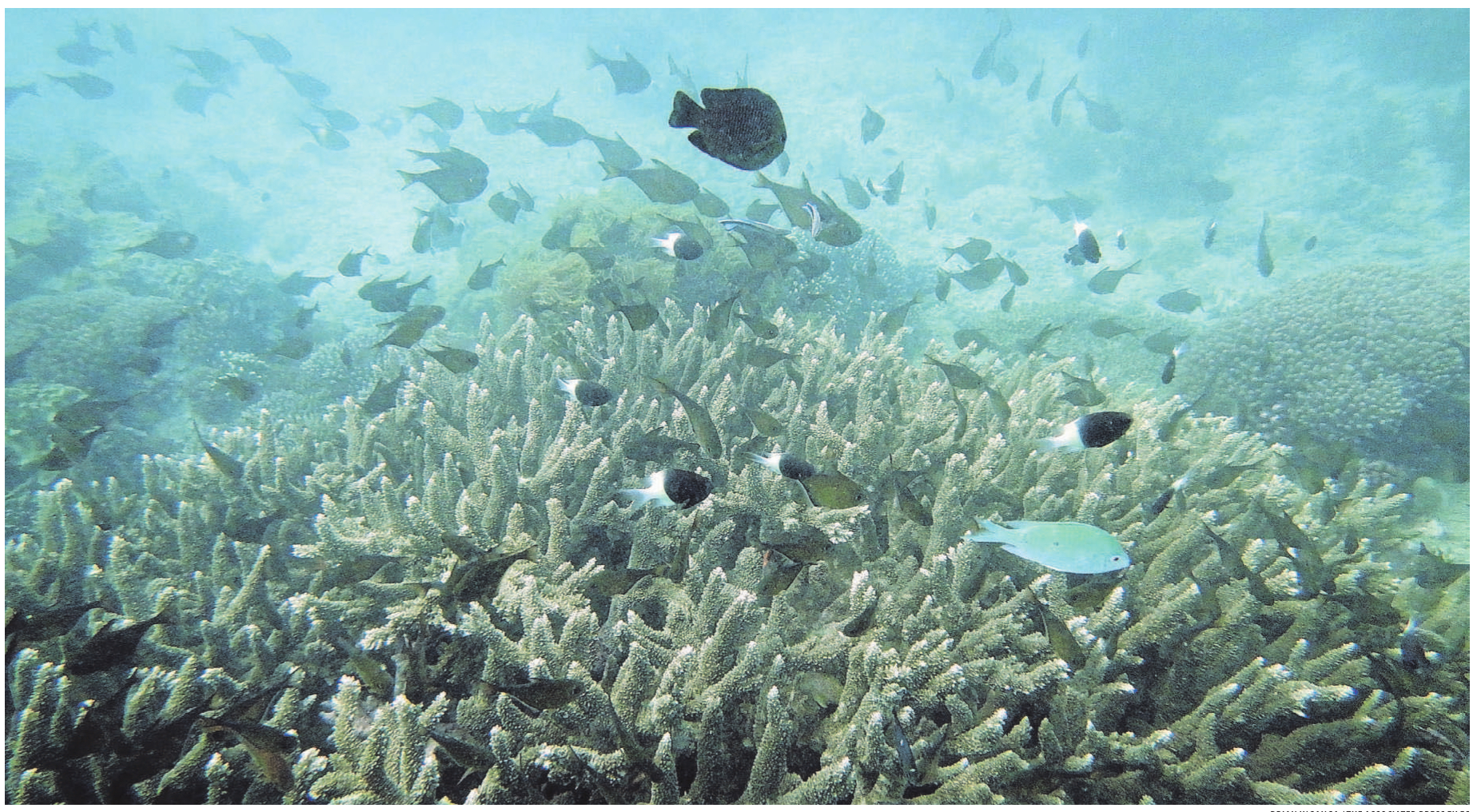
Researchers discovered that behavioural patterns in the African turquoise killifish helped them forecast their four-to-eight month lifespan. BRIAN INGANGA / THE ASSOCIATED PRESS FILES
A TINY fish that lives only four to eight months is revealing that aging may unfold in distinct biological stages rather than as a slow, continuous decline — findings that could help scientists better understand how people can age better.
By tracking how more than 700 African turquoise killifish swim, sleep and feed — and how that behaviour changes as the fish age — researchers at Stanford University were able to forecast their four- to eight-month lifespans, according to a study published in Science this spring.
“Their behaviour even at middle age was enough to predict how long or short they would be able to live,” said Anne Brunet, a Stanford professor whose lab studies the genetics of aging.
Fish that spent more of their inactive, sleep-like periods at night generally lived longer, while those that showed more inactivity during the day — the fish version of an afternoon nap — tended to have shorter lifespans.
Researchers also found that longer-living fish remained more active and maintained more consistent daily activity patterns. Shorter-lived fish experienced earlier declines in movement and disruptions to their normal day-night rhythms. The behaviours were associated with lifespan but did not establish that sleeping or swimming more caused the fish to live longer.
Using machine learning, the researchers created a behavioural “clock” that estimated a fish’s biological age based on its daily activity patterns. In tests, the model predicted age within about 12 days, including when it was tested on fish whose data were not used to build it.
The same behavioural patterns also enabled the researchers to distinguish between fish likely to have relatively long or short lifespans once they reached young adulthood.
The most surprising finding was that the fish appeared to move through distinct behavioural phases as they aged, Brunet said.
“It suggests instead of aging being gradual, it could be more like a step process,” she said.
The researchers found that fish spent periods in relatively stable behavioural states before abrupt shifts to the next phase of aging. Those transitions were marked by co-ordinated changes in behaviours such as swimming activity, movement patterns and sleep, and occurred at different times for different fish. Brunet said the findings suggest there may be critical windows when dietary changes, drugs or therapies targeting aging-related genes could have the greatest effect on lifespan.
Brunet’s laboratory has spent years developing a model for aging using African turquoise killifish. Unlike mice, which can take several years to complete a lifespan study, killifish live a few months but share characteristics with longer-living humans, including an adaptive immune system.
As part of the same study, the researchers also analyzed gene activity in different tissues, including the liver and heart, to better understand the molecular changes accompanying the behavioural shifts.
Debashis Sahoo, an associate professor of pediatrics at UC San Diego School of Medicine who was not involved in the Stanford research but has studied aging in sea squirts and other organisms, said killifish fill an important gap in aging research.
He explained that if scientists want to study aging, they need a model with a practical lifespan for research.
“They make for a really good system to study aging,” he said.
Sahoo said one of the strengths of the Stanford study is combining long-term behavioural tracking with analyses of gene activity in tissues including the heart and liver.
The researchers found that the behavioural transitions coincided with changes in gene expression across those tissues, suggesting the shifts reflected underlying biological changes rather than changes in behaviour alone.
Sahoo said comparing those molecular patterns with data from humans and other animals could help identify aging processes across species.
Model organisms have long helped scientists uncover biological mechanisms that are difficult or impossible to study directly in humans because researchers can carefully control experiments, collect tissue samples throughout an animal’s life and test potential interventions in ways that aren’t feasible in people.
Sahoo said he would like to see whether similar immune signalling occurs in killifish, which also possess macrophages.
“I’m sure in the vertebrate system, if we look at those signals, we may get insight into whether the same mechanisms are involved,” he said.
Brunet said the next step is to understand the genetic and molecular mechanisms behind the behavioural changes the team observed. Her team hopes to use artificial intelligence to build genomic clocks — models based on patterns of molecular rather than behavioural changes — to estimate an animal’s biological age and help pinpoint when key transitions in aging occur.
“The goal is to generate hypotheses about biological pathways that can later be tested in people,” she said.
— The Mercury News